01.10.2026
From 20 to 25 September 2026, a delegation of the Constitutional Court of Ukraine, comprising Constitutional Court judges Viktor Gorodovenko (Head of the Delegation), Oksana Hryshchuk, Alla Oliinyk, Petro Filiuk and Galyna Yurovska, paid a working visit to the Republic of Estonia.
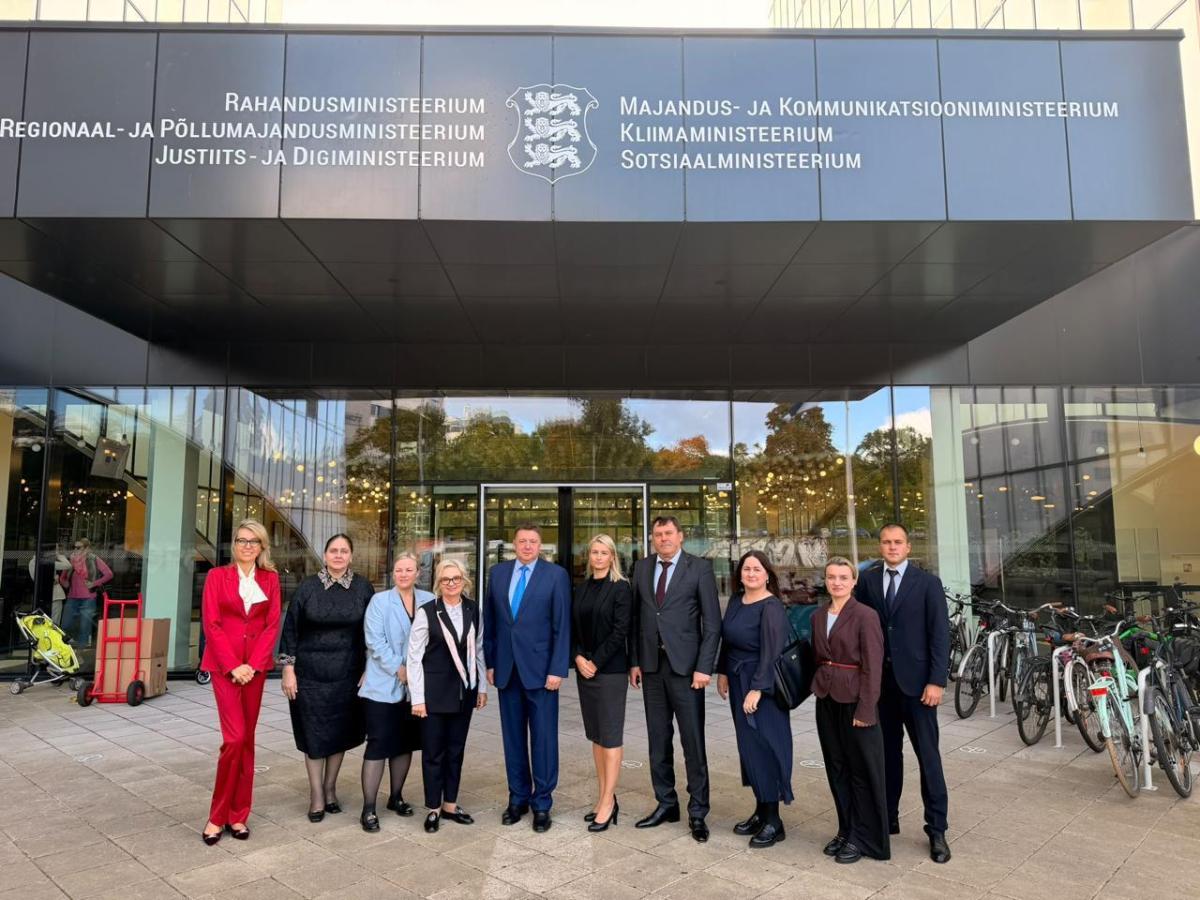
As part of the programme, the delegation visited the Ministry of Justice and Digital Affairs of the Republic of Estonia. During the meeting with Mari-Liis Mikli, Deputy Secretary General for Judicial Administration Policy, and Margit Lauri, Adviser at the Ministry, the participants discussed the reform of judicial administration in the Republic of Estonia, the functioning of the e-File electronic court system, and the use of artificial intelligence technologies in the justice system. Particular attention was paid to digital tools used to organise judicial activities, provide access to judicial information and improve the efficiency of courts.
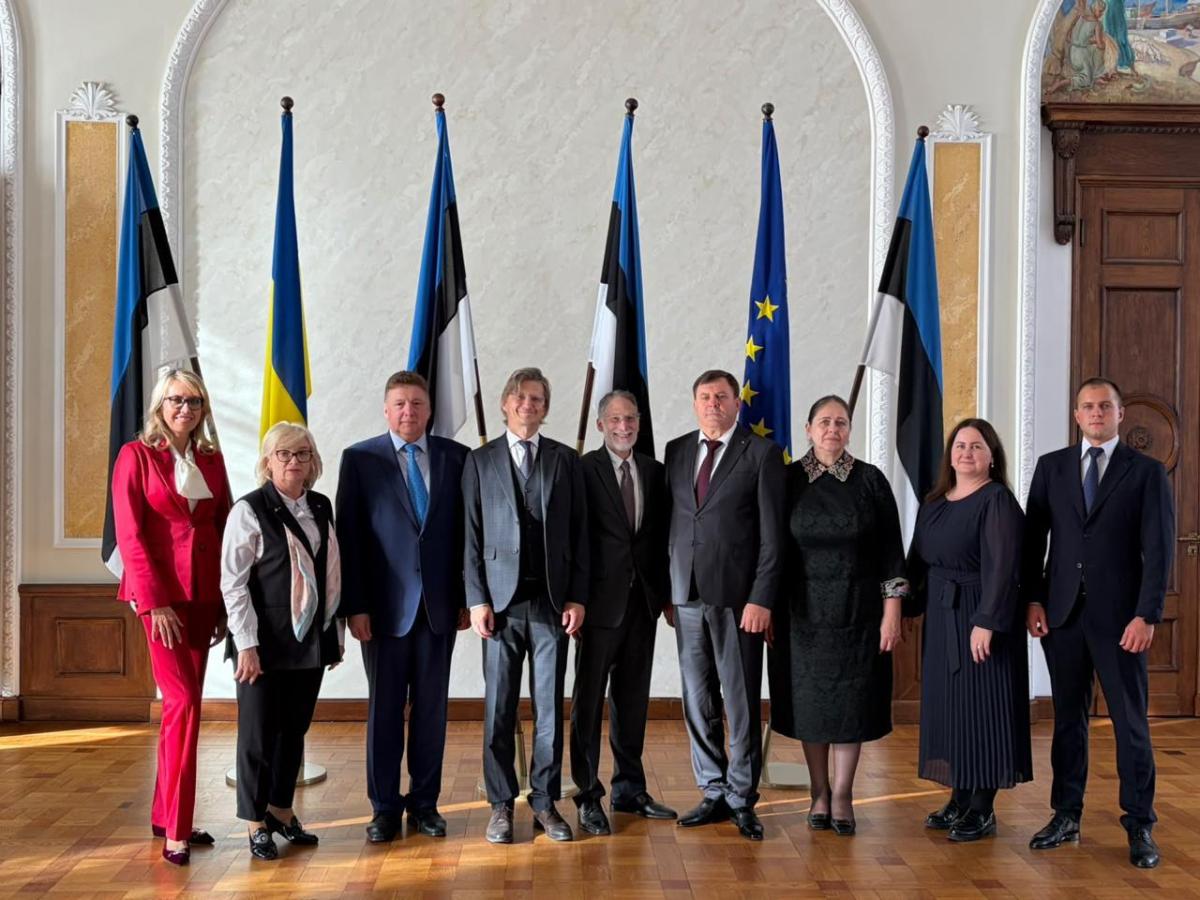
The delegation of the Constitutional Court of Ukraine held a meeting with Ando Kiviberg, Chairman of the Constitutional Committee of the Riigikogu, his Deputy Ants Frosch, and Committee Member Pipi-Liis Siemann. The meeting was also attended by Ivo Pilving, Justice of the Supreme Court of Estonia, and Mitchell N. Berman, Professor of Law and Philosophy at the University of Pennsylvania (USA). The discussion focused on the legislative process in the field of constitutional law, the role of the parliamentary committee in considering relevant draft laws, and interaction between Parliament and the Supreme Court on matters of constitutional review.
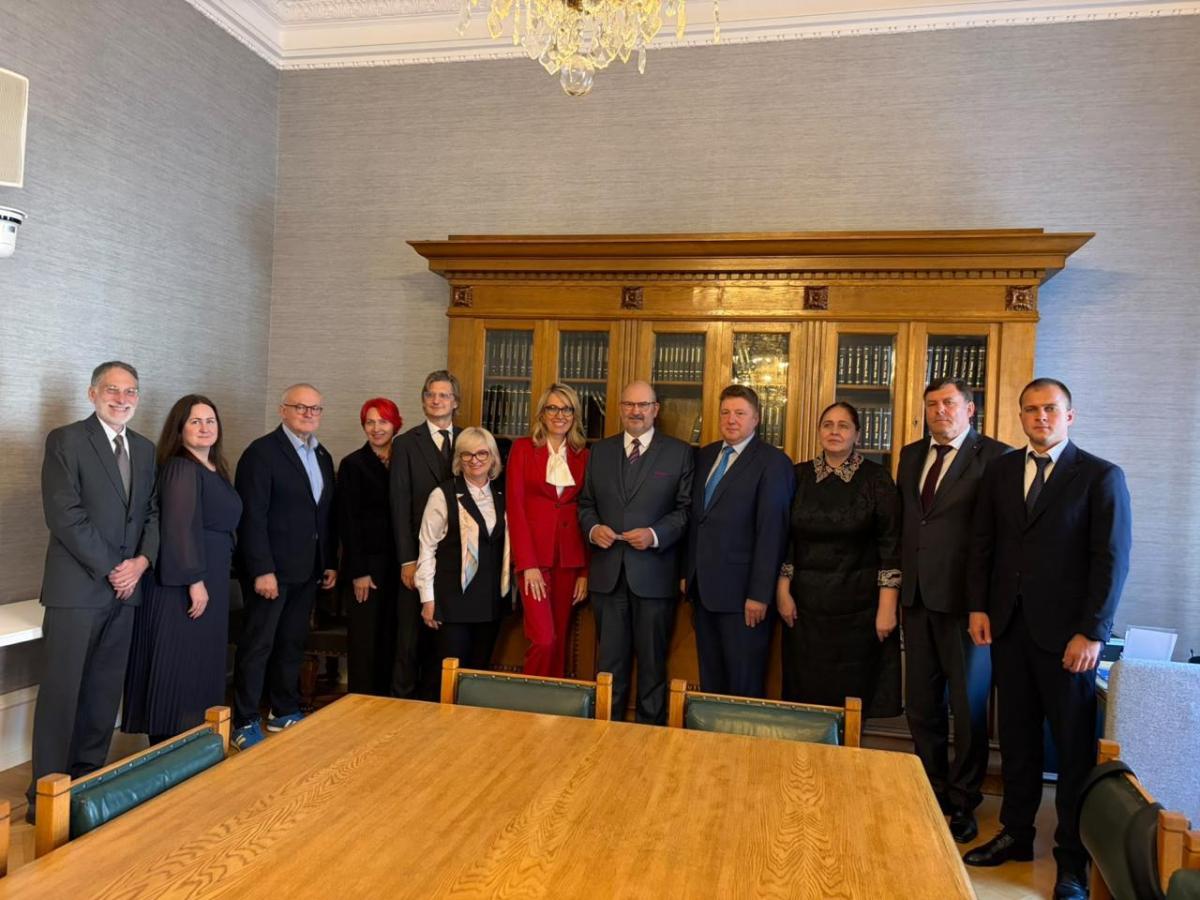
The professional dialogue continued at the Office of the Chancellor of Justice of the Republic of Estonia, where the delegation held a working meeting with Marju Uljas, Head of Law Enforcement Affairs Department, Liina Lust-Vedder, Senior Adviser, and Kertti Pilvik, International Relations and Development Manager. Representatives of the institution introduced the Ukrainian delegation to its powers and main areas of activity. The parties discussed mechanisms for protecting constitutional rights and freedoms, procedures for considering complaints concerning possible violations of fundamental rights, specific aspects of constitutional review, and cooperation between the Chancellor of Justice and the Supreme Court.
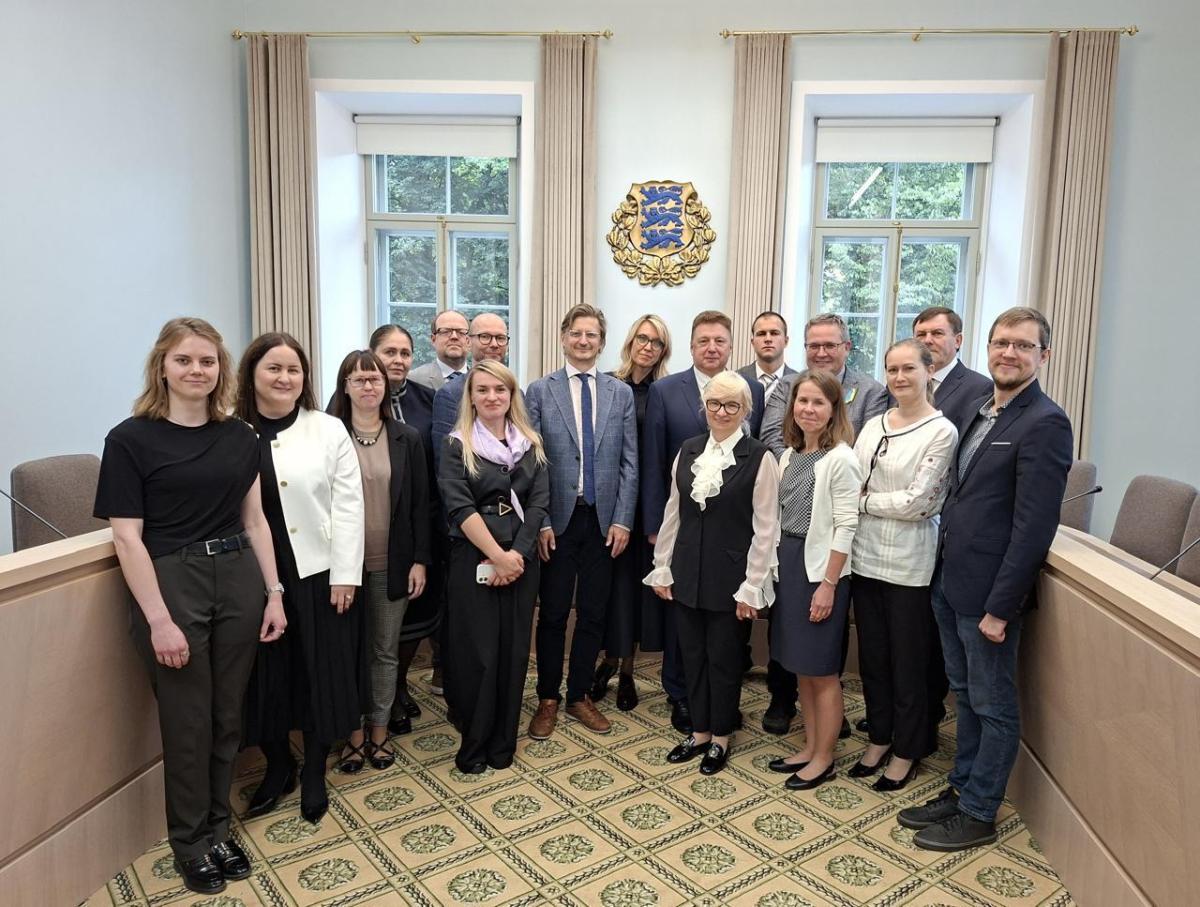
During the working meeting between the delegation of the Constitutional Court of Ukraine and representatives of the Supreme Court of Estonia, welcoming remarks were delivered by Viktor Gorodovenko, Judge of the Constitutional Court of Ukraine, and Villu Kõve, President of the Supreme Court of Estonia. The activities of the Supreme Court of Estonia were presented by Justice Nele Siitam, while Judge Galyna Yurovska provided an overview of the activities of the Constitutional Court of Ukraine. The participants exchanged experience regarding the organisation of judicial institutions, the exercise of constitutional review, and current issues of constitutional adjudication. Particular attention was paid to the activities of the Constitutional Review Chamber of the Supreme Court of Estonia and practical aspects of ensuring the effectiveness of judicial activities.
The event was also attended by Justices of the Supreme Court of Estonia Ivo Pilving, Saale Laos, Heili Sepp, Juhan Sarv and Paavo Randma, Legal Adviser to the President of the Supreme Court Karin Laichter-Tammisto, and Judicial Advisers to the Constitutional Review Chamber Gertrud Ojavee and Martin Kreutzberg.
On the same day, representatives of the Constitutional Court of Ukraine held a meeting with Priit Pikamäe, Director of the School of Law at the University of Tartu, to discuss current trends in legal education, the training of lawyers, and opportunities for the professional development of young legal professionals.
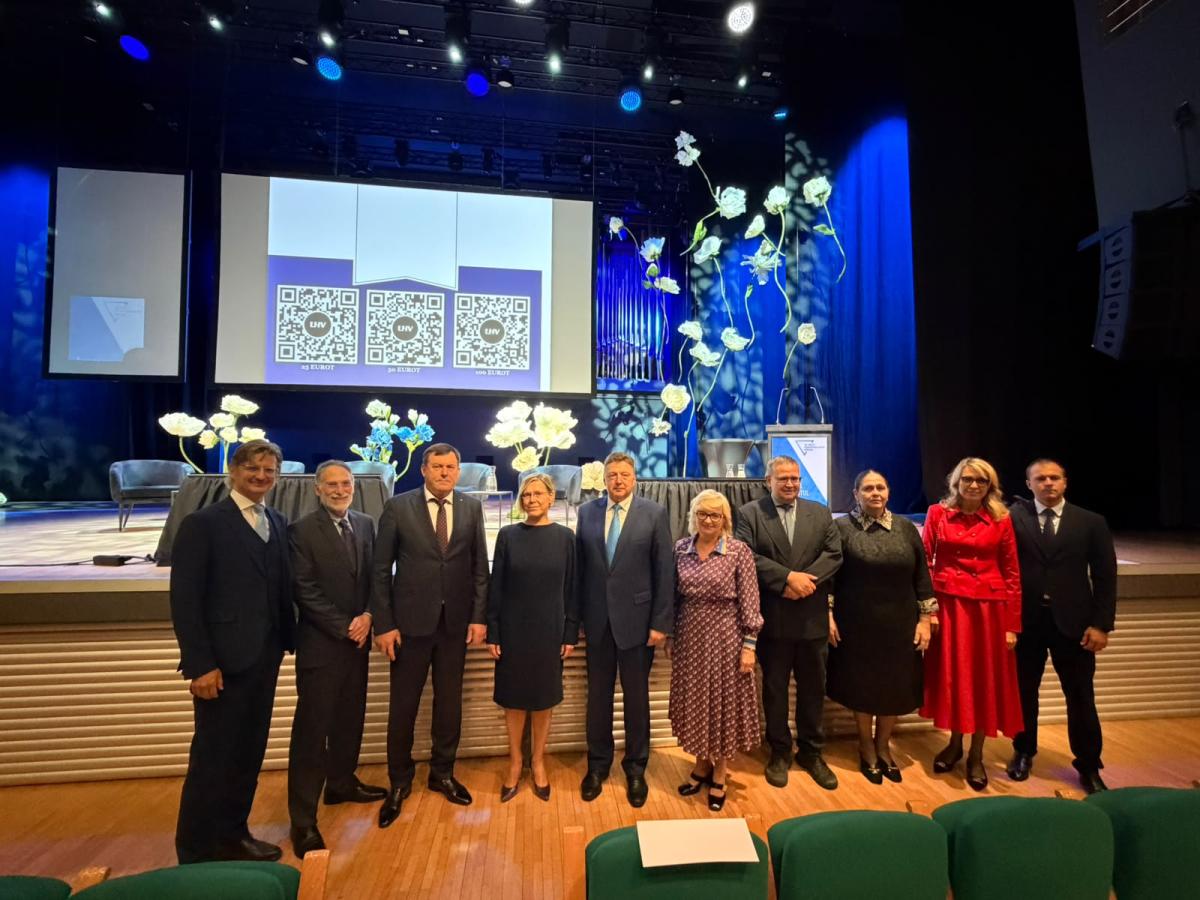
An important event was the participation of the Constitutional Court delegation in the 39th Estonian Legal Scholars’ Days “Rule of Law in the Digital Age.” The participants were welcomed by Viktor Gorodovenko, Judge of the Constitutional Court of Ukraine. He emphasised that for more than four and a half years of full-scale war, Ukrainian judges and legal professionals have continued to perform their professional duties under extremely difficult conditions. According to the speaker, court hearings are interrupted by air-raid alerts, while judicial infrastructure has suffered damage and destruction.
“This experience has demonstrated that in times of crisis, when institutions and society are under the greatest pressure, the rule of law becomes particularly important,” the judge stressed.
In this context, Viktor Gorodovenko also noted that Estonia’s experience is particularly valuable for Ukraine, including its democratic transformation, European integration and development of modern digital institutions.
The participants were also welcomed by Risto Sepp, Chairman of the Association of Estonian Lawyers, and Villu Kõve, President of the Supreme Court of Estonia.
The central themes of the professional discussions were the challenges posed by the rapid development of digital technologies to a democratic state governed by the rule of law; the protection of fundamental rights and privacy in the context of the state’s use of large volumes of data; and the impact of political polarisation on the functioning of democratic institutions and the independence of the judiciary. The programme also covered the use of artificial intelligence in legal practice and education, digital sovereignty, access to justice, automated decision-making, and digital evidence.
The keynote address was delivered by Ülle Madise, Chancellor of Justice of the Republic of Estonia, who was elected President of Estonia in September 2026. The event also brought together economic analyst Peeter Koppel, Director General of the Police and Border Guard Board Egert Belitšev, Heidi Reinson, Senior Specialist in Financial Behaviour Research at the University of Tartu, Hent-Raul Kalmo, Legal Adviser to the President of the Republic of Estonia, Ivo Pilving, Chairman of the Administrative Law Chamber of the Supreme Court of Estonia, Julia Laffranque, Justice of the Supreme Court of Estonia, Mitchell N. Berman, Professor of Law and Philosophy at the University of Pennsylvania, and Kaarlo Tuori, Emeritus Professor at the University of Helsinki.
On the final day of the visit, the Constitutional Court delegation held a working meeting with Mario Truu, President of the Tartu Circuit Court, Marek Vahing, President of Tartu District Court, and Ene Andresen, President of Tartu Administrative Court. Paavo Randma, Justice of the Supreme Court of Estonia, also took part in the meeting. The participants discussed the organisation of courts of different jurisdictions, practical aspects of judicial administration, and the functioning of judicial infrastructure.
The working visit contributed to strengthening professional dialogue between the Constitutional Court of Ukraine and the Supreme Court of Estonia, as well as to developing contacts with other state, judicial and legal institutions of Estonia. The exchange of experience provided an opportunity to gain a deeper understanding of the Estonian model of constitutional review, modern approaches to judicial administration and the digitalisation of justice, as well as the practice of applying cutting-edge technologies in the work of state institutions and courts.