22.10.2026
On 15 October 2026, an online lecture entitled “On the Constitutionality of the Procedure for Lifting a Preventive Measure to Enable Military Service in the Context of the Decision of the Constitutional Court of Ukraine No. 7-r(II)/2026 dated 15 July 2026” was held with the participation of judges of the Constitutional Court of Ukraine.
The event brought together a wide audience, including representatives of the National School of Judges of Ukraine, legal practitioners, lawyers, prosecutors, judges of the judicial system, scientist, lecturers, postgraduate students, university students and participants of the Junior Academy of Sciences of Ukraine.
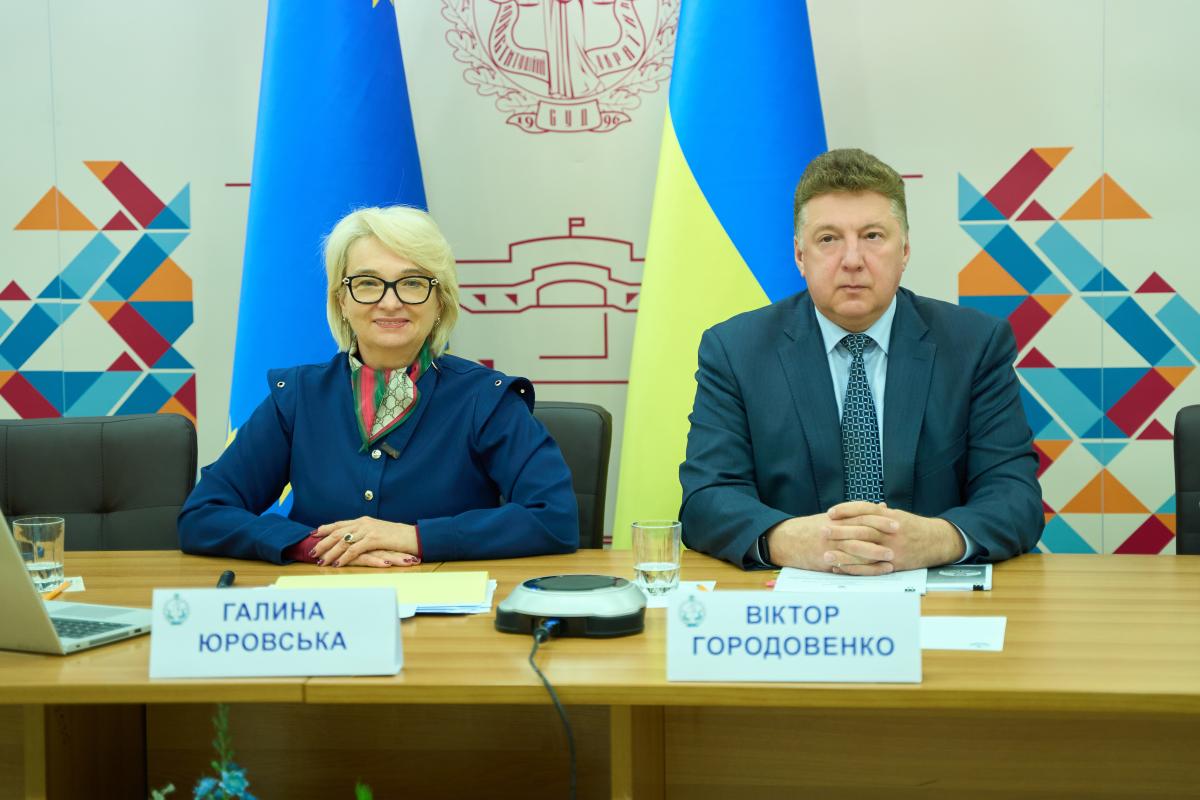
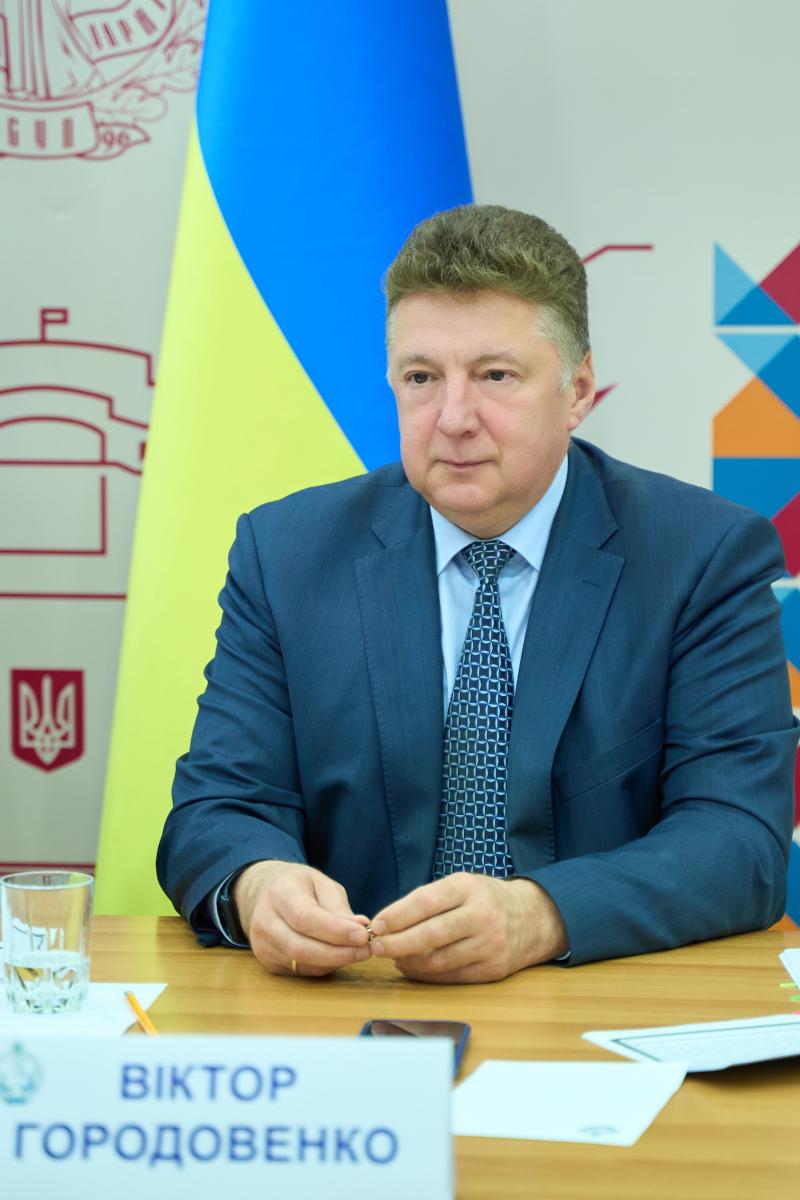
The lecture was delivered by judges of the Constitutional Court of Ukraine Galyna Yurovska and Viktor Gorodovenko (Judge-Rapporteur in the case).
During the lecture, the speakers examined in detail the substance of the Decision No. 7-r(II)/2026 dated 15 July 2026, adopted by the Second Senate of the Constitutional Court of Ukraine in the case upon the constitutional complaint of Yevhen Henievskyi.
The subject of constitutional review in this case was Article 616.1.2 of the Criminal Procedure Code of Ukraine (hereinafter, the “Code”). This provision stipulates that, following consideration of the motion referred to in the first paragraph of the same part, the prosecutor is entitled to apply to the investigating judge or the court hearing the criminal proceedings with a motion to lift the preventive measure of detention imposed on the person concerned, in order to enable them to continue and/or perform military service under mobilisation during a special period and/or military service under contract as enlisted personnel, sergeants, senior sergeants and officers.
Following consideration of the case, the Constitutional Court of Ukraine declared the Article 616.1.2 of the Code unconstitutional. The Court concluded that the mechanism established by this provision, read in conjunction with the Article 616.1, effectively precluded an investigating judge or court from considering a relevant motion submitted by a suspect or accused without the prosecutor’s consent.
Particular attention during the lecture was devoted to the specific features of the legal framework introduced under martial law. It was noted that the large-scale armed aggression of the Russian Federation against Ukraine had objectively necessitated the introduction of special legal mechanisms in criminal proceedings that are not characteristic of a peacetime legal order. At the same time, it was emphasised that even under such circumstances, legislation must remain within the constitutional framework of justice, preserve human rights safeguards and comply with the principle of the rule of law.
The discussion focused on the right of a suspect or accused to have access to a court to determine whether the preventive measure of detention should be lifted to enable them to continue and/or perform military service. The speakers explained that the mechanism provided for in Article 616 of the Code made the possibility of judicial consideration of the relevant motion contingent upon the prosecutor’s initiative.
In this context, emphasis was placed on the interrelationship between the right to liberty and security of person and the right to judicial protection. The Constitutional Court of Ukraine proceeded from the premise that the court is the only body authorised to exercise control over the lawfulness of interference with a person’s right to liberty and security of person, and that other forms of control cannot be regarded as equivalent to judicial review within the meaning of Article 29 of the Constitution of Ukraine. Accordingly, a person’s access to a court in a matter directly affecting their liberty cannot be made dependent on the will of a body or official who does not administer justice.
The lecture also examined the procedural role of the prosecutor under the mechanism established by the legislature. The speakers pointed out that assigning the prosecutor the power to decide whether to refer the relevant motion of the defence to a court for consideration effectively conferred on the prosecutor the function of a procedural “filter”. At the same time, when submitting such a motion to the court, the prosecutor’s procedural role changed: the prosecutor had an interest in the motion being granted, a position more characteristic by its nature of the defence.
Considerable attention was also devoted to the principle of proportionality as an element of the rule of law. It was noted that the aim of the legislative regulation, which was to ensure the state’s defence capability and enabling individuals to perform military service, is legitimate. However, the existence of a legitimate aim alone is insufficient to justify interference with constitutional rights. According to the CCU judges, the means chosen by the legislature and the procedure for their implementation must be suitable, necessary and proportionate to the restrictions imposed on human rights.
During the discussion, the speakers also noted that the Constitutional Court of Ukraine had not ruled out the possibility of establishing a special mechanism for lifting a preventive measure to enable military service under martial law. In their view, the constitutionally significant issue was the procedure for implementing that mechanism and the need to ensure that individuals have direct and effective access to a court without prior approval from the prosecution.
The legal consequences of the Decision were also explained. In particular, the Constitutional Court of Ukraine postponed the loss of legal force of the unconstitutional provision for six months from the date on which the Decision was delivered. This approach enables the legislature to regulate the relevant procedure in accordance with the Court’s legal positions without immediately discontinuing the special mechanism introduced to meet the state’s needs under martial law.
The Decision is accompanied by a separate opinion of a Judge of the Constitutional Court of Ukraine Oleksandr Vodiannikov, setting out his reasoning and conclusions on its principal aspects.