24 February 2026
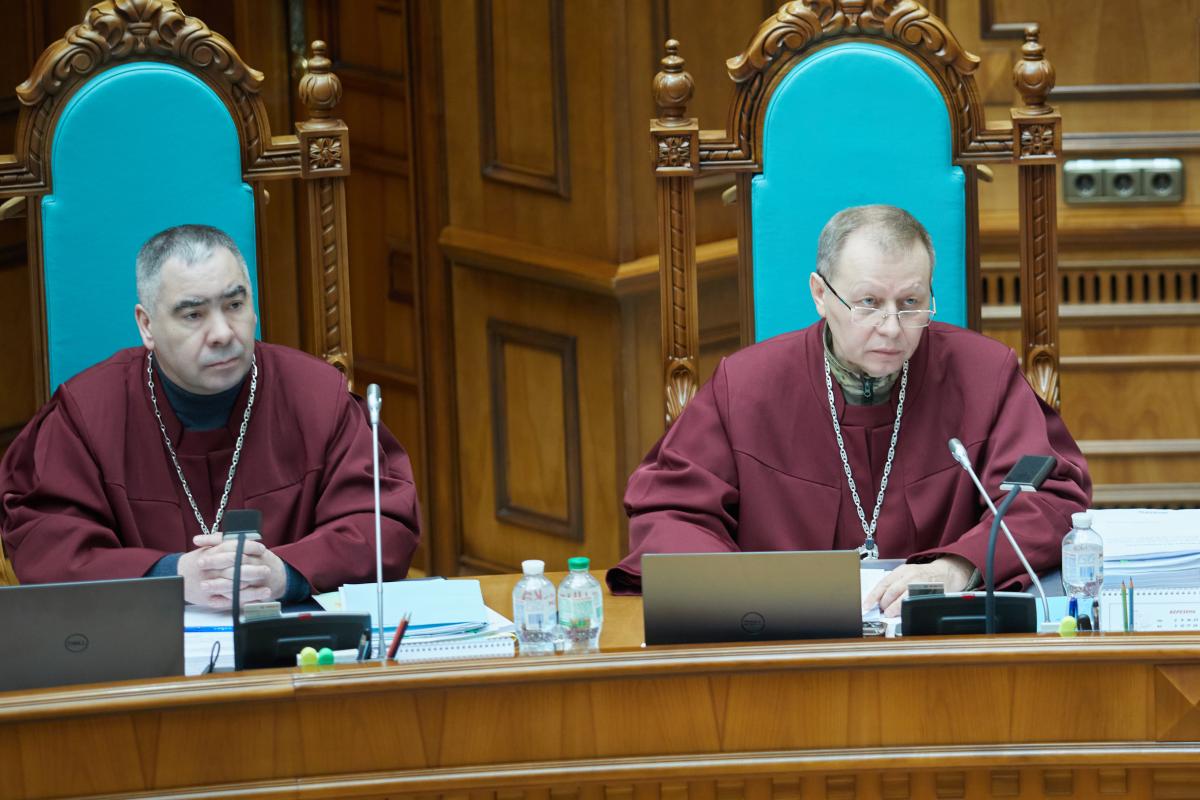
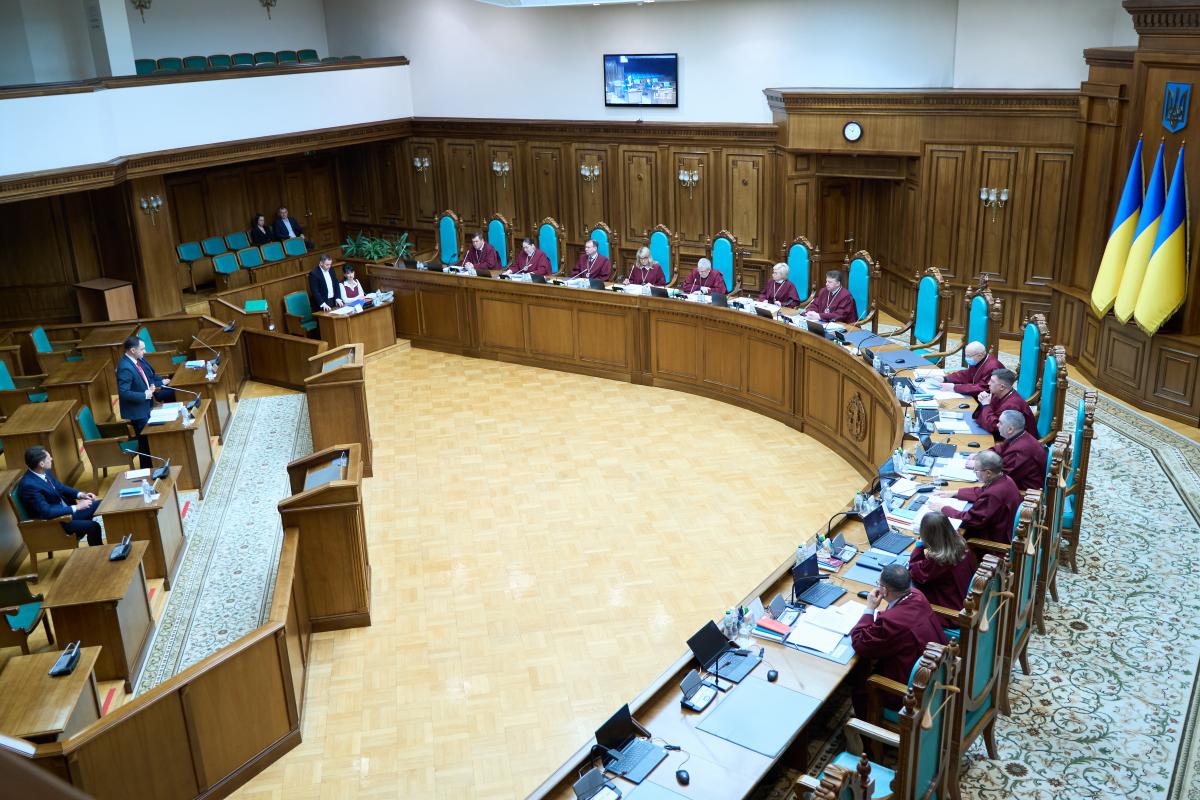
On 24 February 2026, the Grand Chamber deliberated the case in public part of plenary session in the form of written proceedings on the basis of a constitutional petition by the Supreme Court.
During the plenary session, the judge-rapporteur in the case, Viktor Kychun, informed that the Supreme Court had appealed to the Constitutional Court of Ukraine with a request to verify the constitutionality of subparagraph 2 of paragraph 1 of Section I of the Law of Ukraine “On Amendments to Certain Laws of Ukraine Regarding One-Time Cash Payments to War Veterans and Victims of Nazi Persecution” dated 20 March 2023 No. 2983-IX (hereinafter the “Law No. 2983”).
On the basis of this subparagraph of Article 13.5 of the Law of Ukraine “On the Status of War Veterans and Guarantees of Their Social Protection” No. 3551-XII,
dated 22 October 1993 (hereinafter the "Law No. 3551") is worded as follows: “Every year, on Ukraine's Independence Day, persons with disabilities resulting from war shall be paid a one-time cash payment in the manner and amounts determined by the Cabinet of Ministers of Ukraine within the limits of the relevant budgetary allocations established by the Law on the State Budget of Ukraine”.
The author of the petition considers that the contested provision of Law No. 2983 contradicts Articles 17 and 22 of the Constitution of Ukraine, since the change in the amount of assistance reduces the high level of social protection achieved for persons with disabilities as a result of war, and therefore cannot be considered equivalent, as provided for in Article 2 of Law No. 3551. The Supreme Court also asserts that the abolition of the determination of the amount of the annual one-time cash payment for Ukraine's Independence Day in 2023 at the level of the law and the delegation of powers to determine it to the Cabinet of Ministers of Ukraine indicates a narrowing of the content and scope of existing social rights.
The judge-rapporteur said that to make sure the case was looked at fully and fairly, he sent letters to the President of Ukraine, the Head of the Verkhovna Rada of Ukraine, the Prime Minister of Ukraine, and researchers at the V. M. Koretsky Institute of State and Law of the National Academy of Sciences of Ukraine, the Yaroslav Mudryi National Law University, the Taras Shevchenko National University of Kyiv, and the Ivan Franko National University of Lviv, asking them to share their thoughts on the case. Koretsky Institute of State and Law of the National Academy of Sciences of Ukraine, the Yaroslav Mudryi National Law University, the Taras Shevchenko National University of Kyiv, and the Ivan Franko National University of Lviv, asking them to express their positions on the issues that are the subject of the constitutional petition.
After examining the case materials, the Court proceeded to a in-camera part of the plenary session to deliver its decision.
The plenary session was attended by the representative of the subject of the constitutional petition, Acting Chief of the Supreme Court Staff Rasim Babanly, Permanent Representative of the Verkhovna Rada of Ukraine to the Constitutional Court of Ukraine Maksym Dyrdin, and Representative of the President of Ukraine to the Constitutional Court of Ukraine Serhiy Dembovskyi.
A video recording of the plenary session is available on the official website of the Constitutional Court of Ukraine under the heading “Video broadcasts of CCU sessions’ – ‘Archive of video broadcasts of sessions”.