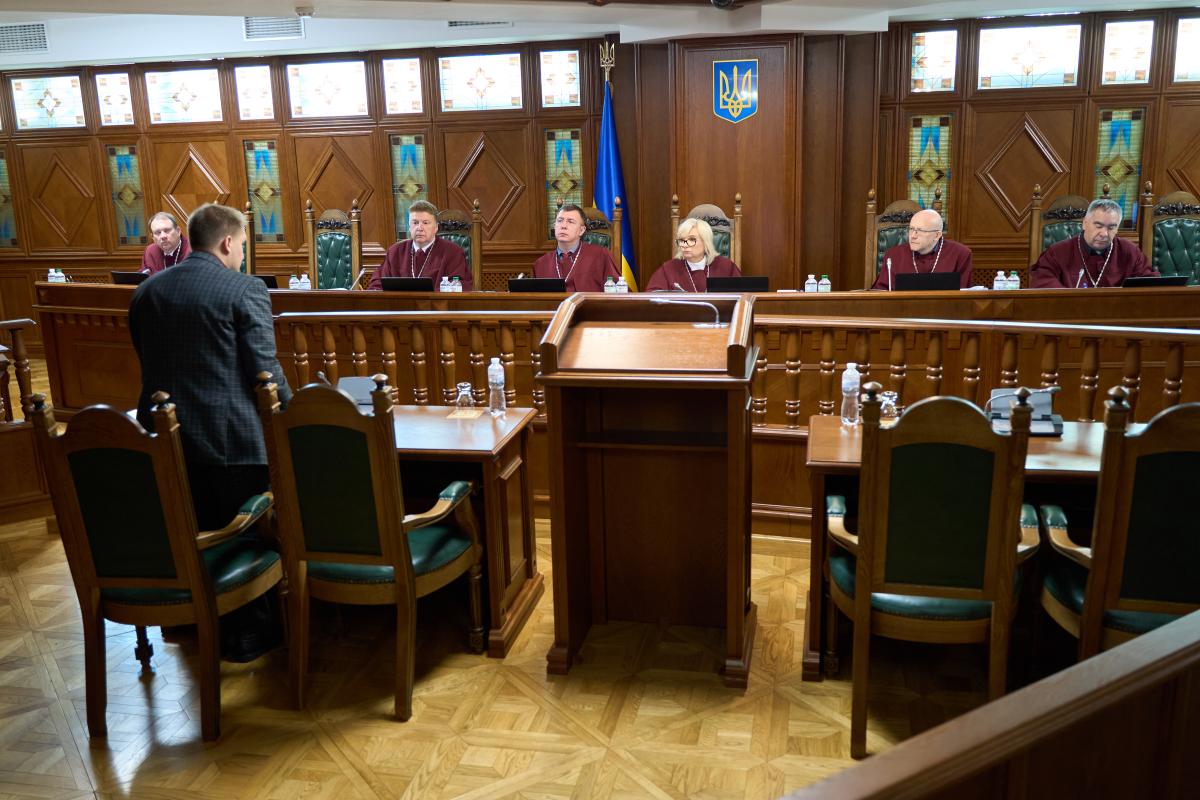
On 16 September 2026, during the public part of the plenary hearing in the form of written proceedings, the Second Senate of the Constitutional Court of Ukraine considered a case upon the constitutional complaint of Alla Kuryschko.
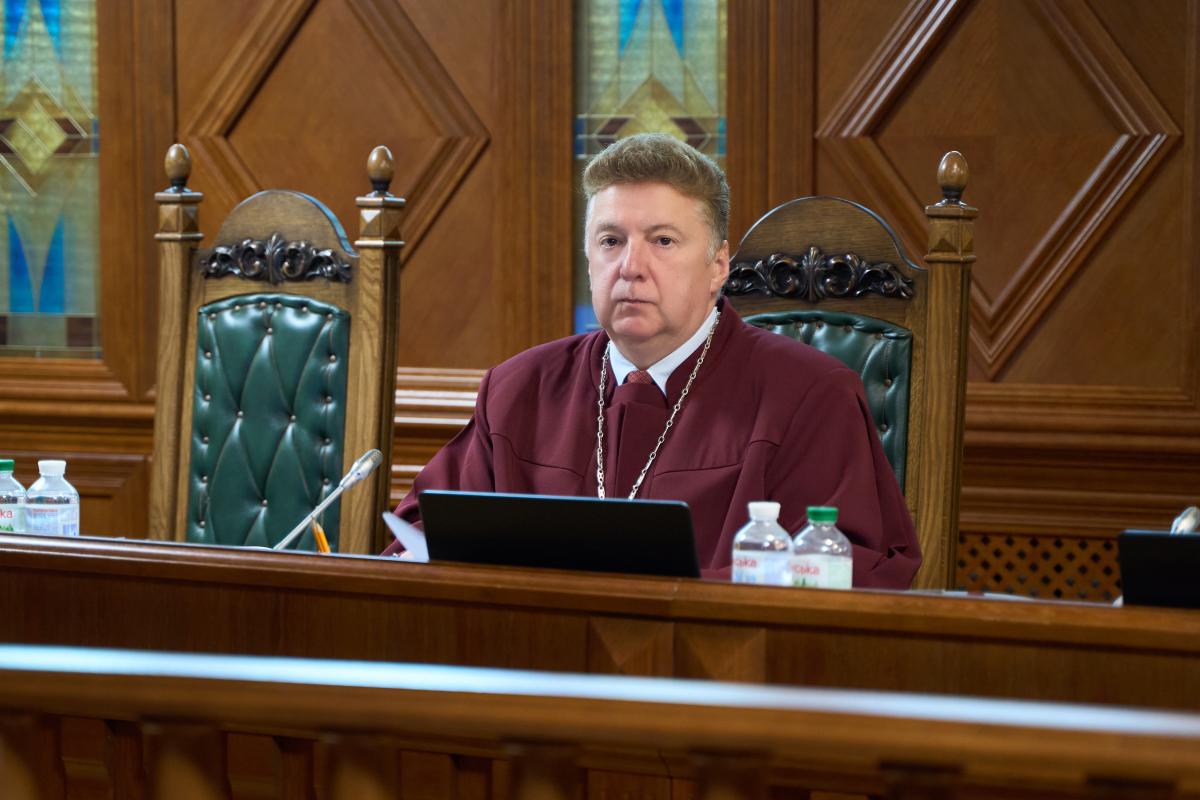
During the plenary hearing, Judge-Rapporteur in the case Viktor Gorodovenko, outlined the substance of the constitutional complaint and the applicant’s arguments.
The Judge informed the Court that the applicant had requested that Articles 369.1, 369.3 and 369.4 of the Criminal Code of Ukraine (hereinafter the “Code”) be examined for compliance with the Constitution of Ukraine.
Pursuant to the contested provisions of Article 368 of the Code:
- “a proposal or promise to an official to provide him/her or a third party with an improper advantage, as well as the provision of such advantage for an act or omission by an official in favour of a person offering, promising or providing such advantage, or in favour of a third party, committed though abuse of power or official position shall be punishable by a fine of one thousand to four thousand tax-free minimum incomes, or restriction of liberty for a term of two to four years, or imprisonment for the same term” (part1);
- “actions provided for by part 1 or 2 of this Article, if the improper advantage was provided to an official holding a responsible position, or committed by a group of persons upon their prior conspiracy shall be punishable by imprisonment for a term of four to eight years with or without forfeiture of property” (part three);
- “actions provided for by part 1, 2 or 3 of this Article, where the improper advantage was provided to an official holding a particularly responsible position or committed by an organised group of people or its member shall be punishable by imprisonment for a term of five to ten years with or without forfeiture of property” (part four).
In this case, the Third Panel of Judges of the Second Senate opened constitutional proceedings with regard to the constitutionality of Articles 369.1 and 369.5 of the Code and refused to open constitutional proceedings with regard to the constitutionality of Article 369.4.
It follows from the constitutional complaint and the materials attached thereto that, by a judgment of the Berdychiv City District Court of Zhytomyr Region, which was upheld by a ruling of the Zhytomyr Court of Appeal Alla Kuryshko was convicted under the Article 369.3 of the Code and sentenced to four years’ imprisonment without confiscation of the property.
Disagreeing with those judicial decisions, attorney V. Rys, acting in the interests of Alla Kuryshko, lodged a cassation appeal to the Supreme Court. The Supreme Court dismissed the cassation appeal and upheld the judgment of the court of the first instance and the ruling of the appellate court.
Alla Kuryshko considers that the contested provisions of the Code “are inconsistent with the requirements of the rule-of-law principle <…> in its aspects of legal certainty, foreseeability, fairness and proportionality. The lack of clarity in the legislative wording leads to inconsistent application of the law, creates excessive room for discretion and prevents a person from foreseeing the legal consequences of his or her conduct in advance.”
In her opinion, “the absence of clear legislative wording as to what exactly may constitute an offer to provide an improper advantage to an official allowed the courts to interpret the Complaint’s discussion of the possibility and procedure for paying a fine as constituting a completed offence under Article 369 of the Criminal Code of Ukraine.”
The applicant states that Article 369 pf the Code “does not specify what the relevant action of an official must be, its mandatory characteristics and limits, nor does it distinguish between actions falling within an official’s powers and any other influence arising from the official’s position. A literal interpretation of the provision gives grounds to consider that it encompasses both lawful and knowingly unlawful actions of an official. Such uncertainty permits excessively broad and arbitrary application of the criminal-law provisions, which is contrary to the principle of legal certainty.”
In her view, the practice of applying the contested provisions of the Code results in a violation of Articles 62.3 and 129.2.2 of the Constitution of Ukraine, since “findings of guilt may be based predominantly on assumptions, a subjective assessment of the content of communications and statements by an interested official, without sufficient objective and unequivocal evidence of direct intent to provide an improper advantage.”
The Judge-Rapporteur informed the Court that, in order to ensure a comprehensive and objective examination of the case, letters requesting positions on the merits of the constitutional complaint had been sent to the President of Ukraine, the Verkhovna Rada of Ukraine, the Supreme Court, as well as to the following institutions: Yaroslav Mudryi National Law University, Taras Shevchenko National University of Kyiv, National University “Odesa Law Academy”, V. M. Koretsky Institute of State and Law of the National Academy of Sciences of Ukraine, Academician Stashis Scientific Research Institute for the Study of Crime Problems, Lviv State University of Internal Affairs, Kharkiv National University of Internal Affairs, Odesa State University of Internal Affairs, and the National Academy of Internal Affairs.
Having examined the case materials, the Court proceeded to the in-camera part of the plenary hearing.
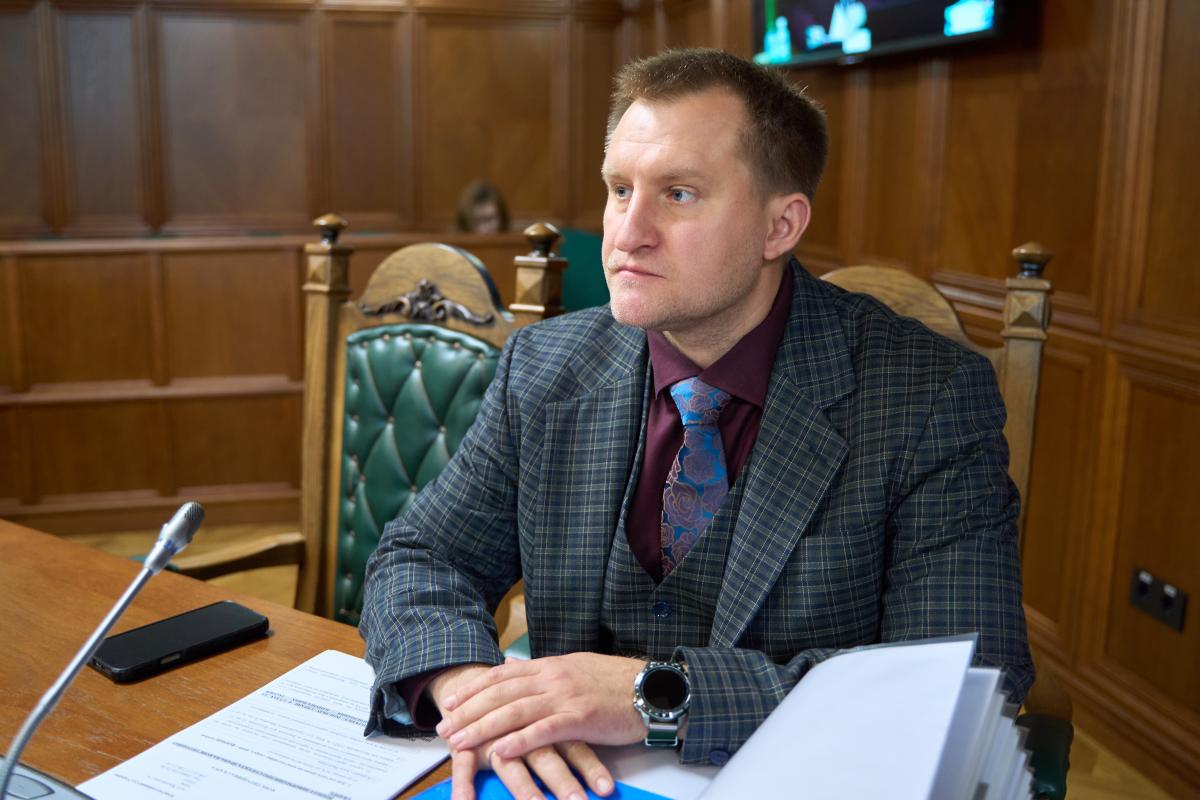
The plenary hearing was attended by the representative of the subject of the right to a constitutional complaint, attorney Oleksandr Leshchenko.
A video recording of the plenary session is available on the Court's official website under the heading “Archive of Video Broadcasts of Hearings”.