
The Role of the US Supreme Court in Exercising Constitutional Review: Thematic Online Lecture
16 листопада 2026 року
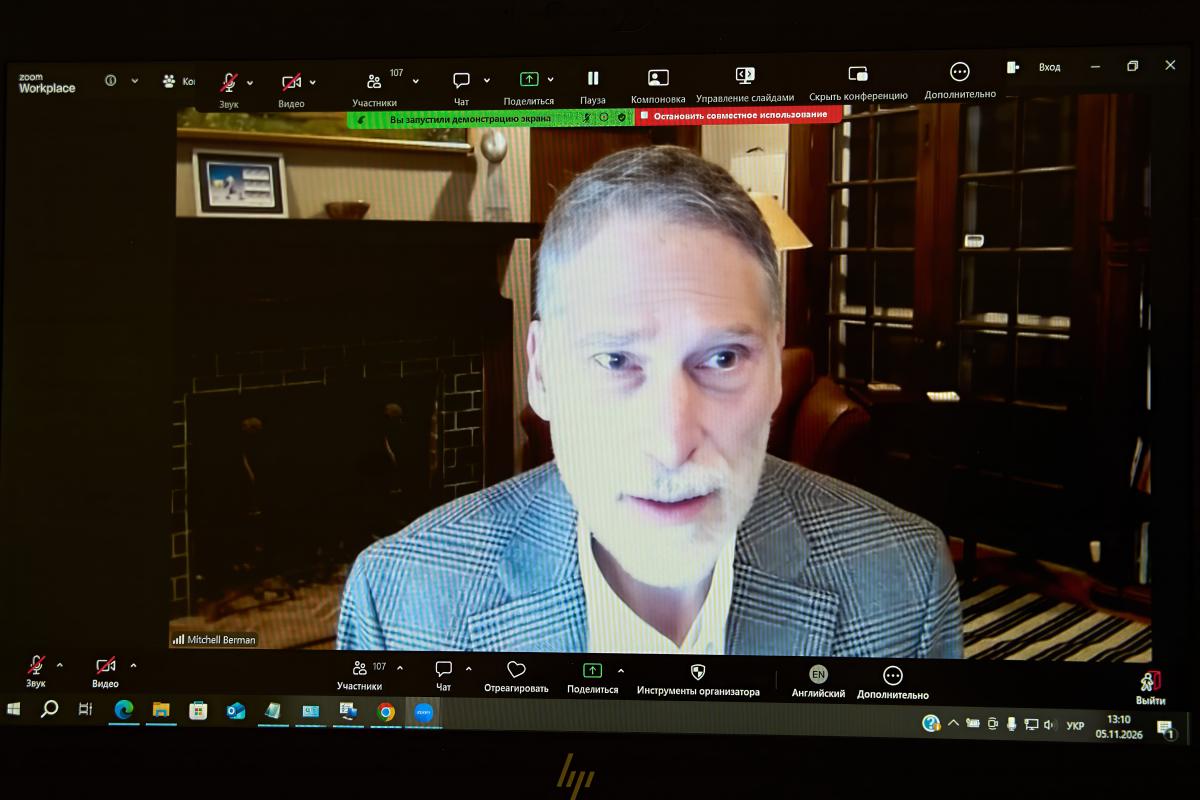
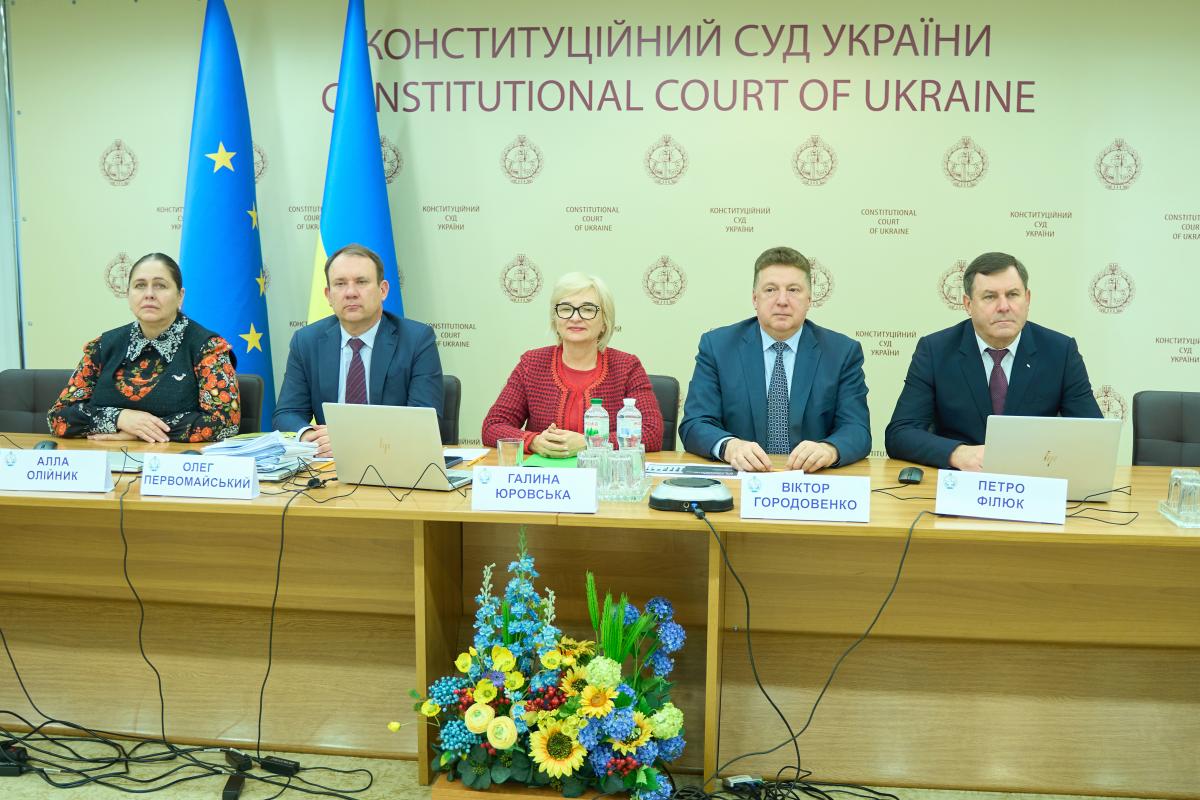
A thematic online lecture entitled “The Role of the US Supreme Court in Exercising Constitutional Review” was held on 5 November 2026, with the participation of Mitchell Berman, Professor at the University of Pennsylvania (USA), and Viktor Gorodovenko, Alla Oliinyk, Oleh Pervomaiskyi, Petro Filiuk and Galyna Yurovska, judges of the Constitutional Court of Ukraine.
The lecture focused on the specific features of the American model of constitutional review, the powers of the US Supreme Court, and its role in ensuring the supremacy of the US Constitution and the protecting constitutional rights and freedoms.
The event brought together a broad legal audience, including judges, lawyers, prosecutors, representatives of the National School of Judges of Ukraine, postgraduate students, lecturers and students of higher education institutions, as well as the youngest researchers – students of the Junior Academy of Science.
During the lecture, Professor Mitchell Berman introduced participants to the fundamental principles governing the US judicial system, focusing on the place of the US Supreme Court within the system of government and the specific features of its exercise of constitutional review.
The speaker provided an overview of the composition of the US Supreme Court and the procedure for its formation, the appointment of justices, guarantees of their independence and the specific features of its proceedings. In particular, he noted that, unlike countries with specialised constitutional review bodies, in the United States the constitutionality of legislative acts is determined by courts of general jurisdiction, with the US Supreme Court serving as the highest court in the judicial system.
Particular attention was devoted to the mechanism of constitutional review. He explained that questions concerning the constitutionality of legal acts arise in the course of adjudicating specific cases. At the same time, the US Supreme Court has discretion to select most of the cases it agrees to hear, enabling it to focus on issues of considerable importance for the development of constitutional law and judicial practice.
Mitchell Berman also emphasised the legal force of decisions of the US Supreme Court and their impact on the activities of public authorities. According to him, judicial decisions on the constitutionality of legislative acts are binding, and the Court's findings cannot be overridden by the adoption of an ordinary statute. In this context, the lecturer drew attention to the independence of the judiciary and the importance of ensuring compliance with judicial decisions in order to maintain the stability of the constitutional order.
An important part of the lecture was devoted to an analysis of the specific features of the US Constitution, including its long history, relatively short text and complex amendment procedure. He emphasised the importance of constitutional interpretation in circumstances where the text of the Basic Law does not provide direct answers to all the questions arising in the course of social development.
To illustrate the role of the US Supreme Court in protecting constitutional rights, the speaker referred to its case-law, in particular its decision in Loving v. Virginia (1967), in which the Court declared unconstitutional a statutory ban on interracial marriage. This example demonstrated the importance of judicial interpretation of constitutional guarantees of equality and the protection of human rights.
During the lecture, Mitchell Berman also addressed the relationship between the stability of constitutional provisions and the evolution of their interpretation in judicial practice, the impact of changes in the composition of the US Supreme Court on the development of its legal positions, as well as contemporary challenges relating to public perceptions of the activities of the highest court.
The event provided an opportunity for a professional exchange of views on different models of constitutional review, contemporary approaches to constitutional interpretation, and the role of constitutional jurisdiction bodies in upholding the rule of law and protecting human rights.

VIDEO: https://youtu.be/v6CTB51D5zQ