CCU Commences Examination of the Case Upon the Procedure for Payment of Pensions to Certain Categories of Persons during Martial Law
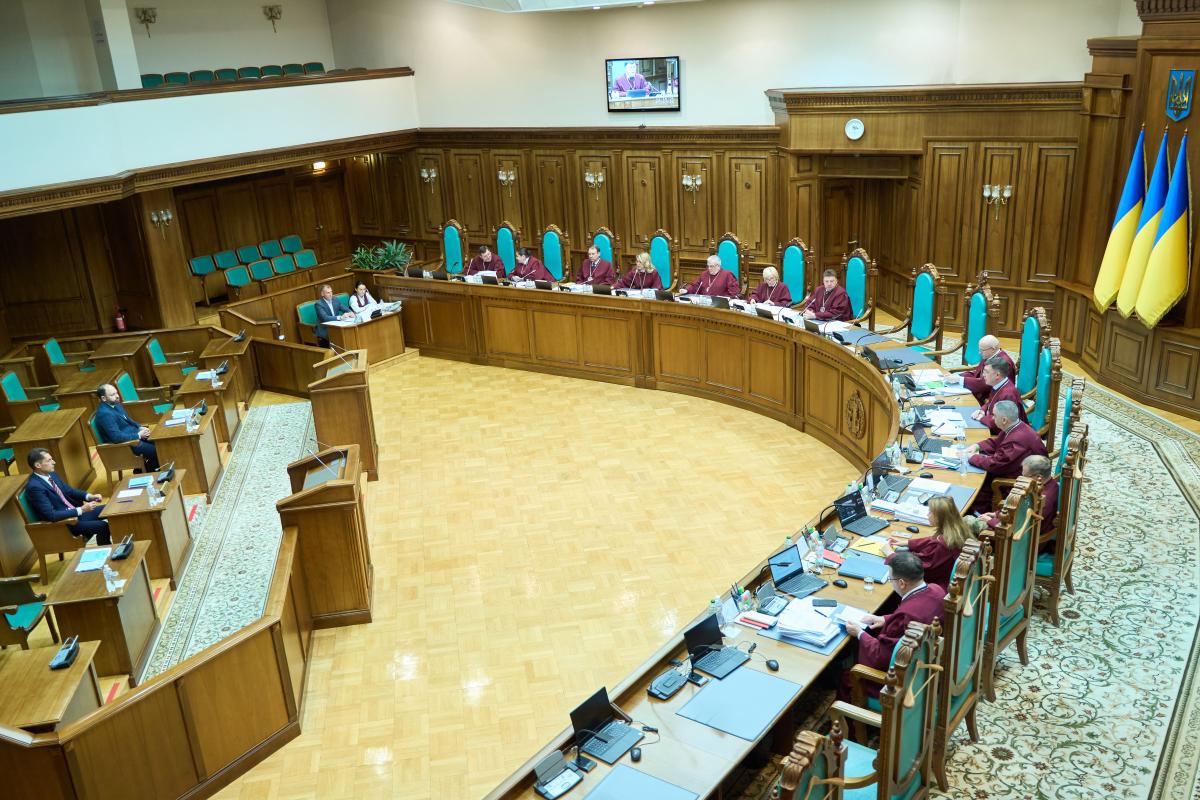
On 5 November 2026, the Grand Chamber of the Constitutional Court of Ukraine, at the public part of its plenary session held in the form of written proceedings, examined the case upon the constitutional petition of the Supreme Court.
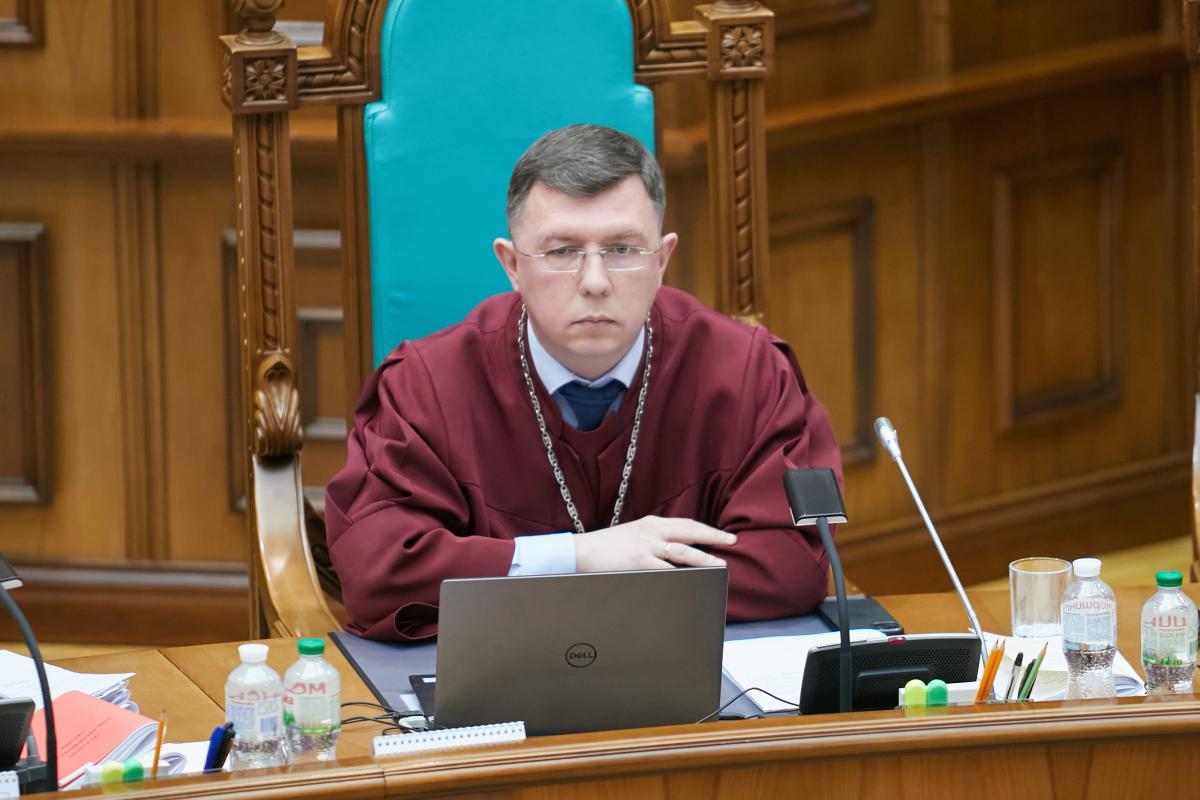
During the plenary session, Serhiy Riznyk, the Judge-Rapporteur in the case, informed the Court that, by its Resolution dated 15 May 2026, the Plenum of the Supreme Court had delivered a decision to appeal to the Constitutional Court of Ukraine concerning the constitutionality of certain provisions of Article 30 of the Law of Ukraine “On the State Budget of Ukraine for 2026” No. 4695–IX dated 3 December 2025 (hereinafter, “Law No. 4695”), as well as certain provisions of the Resolution of the Cabinet of Ministers of Ukraine “On Determining the Procedure for Payment of Pensions to Certain Categories of Persons in 2026 during Martial Law” No. 1778 dated 30 December 2025 (hereinafter, the “Resolution”).
Pursuant to Article 30 of Law No. 4695, in 2026, for the duration of martial law in Ukraine, pensions granted or recalculated in accordance with the Law of Ukraine “On Pension Provision for Persons Discharged from Military Service and Certain Other Persons” No. 2262–XII dated 9 April 1992 (hereinafter, “Law No. 2262”), the amount of which exceeds ten subsistence minimums established for persons who have lost their capacity to work, shall be paid with reduction coefficients applied to the excess amount, in the amounts and according to the procedure determined by the Cabinet of Ministers of Ukraine.
In the opinion of the Supreme Court, the introduction of a restriction on pensions by setting a maximum amount of ten subsistence minimums and applying reduction coefficients, the procedure for which is determined by the Cabinet of Ministers of Ukraine, results in a restriction of the constitutional right to adequate social protection of persons discharged from military service, thereby violating the guarantees established by Article 17 of the Constitution of Ukraine.
The Supreme Court also maintains that “extending the effect of the State Budget Law to pensions granted under Law No. 2262–XII is inconsistent with Articles 8, 19 and 92 of the Constitution of Ukraine”.
Substantiating the unconstitutionality of certain provisions of the Resolution, the subject of the right to constitutional petition emphasises that, although the Resolution was adopted in implementation of Law No. 4695, its content, insofar as it establishes the relevant coefficients, is contrary to the provisions of the Constitution of Ukraine.
The Supreme Court also points out that the delegation of powers to the Cabinet of Ministers of Ukraine is permissible only to the extent that it is consistent with the provisions of the Constitution and laws of Ukraine.
Having examined the case materials, the Court proceeded to the in-camera part of the plenary session.
The plenary session was attended by the representatives of the subject of the right to constitutional petition, namely Rasim Babanly, Head of the Secretariat of the Supreme Court, and Serhii Dembovskyi, Representative of the President of Ukraine in the Constitutional Court of Ukraine.
The video recording of the plenary session is available on the Court’s official website under “Video Broadcasts of the CCU’s Sessions” – “Archive of Video Broadcasts of Sessions”.