Guarantees of Social Protection for Military Service Veterans: CCU Examines Case Upon Constitutional Petition of the Supreme Court
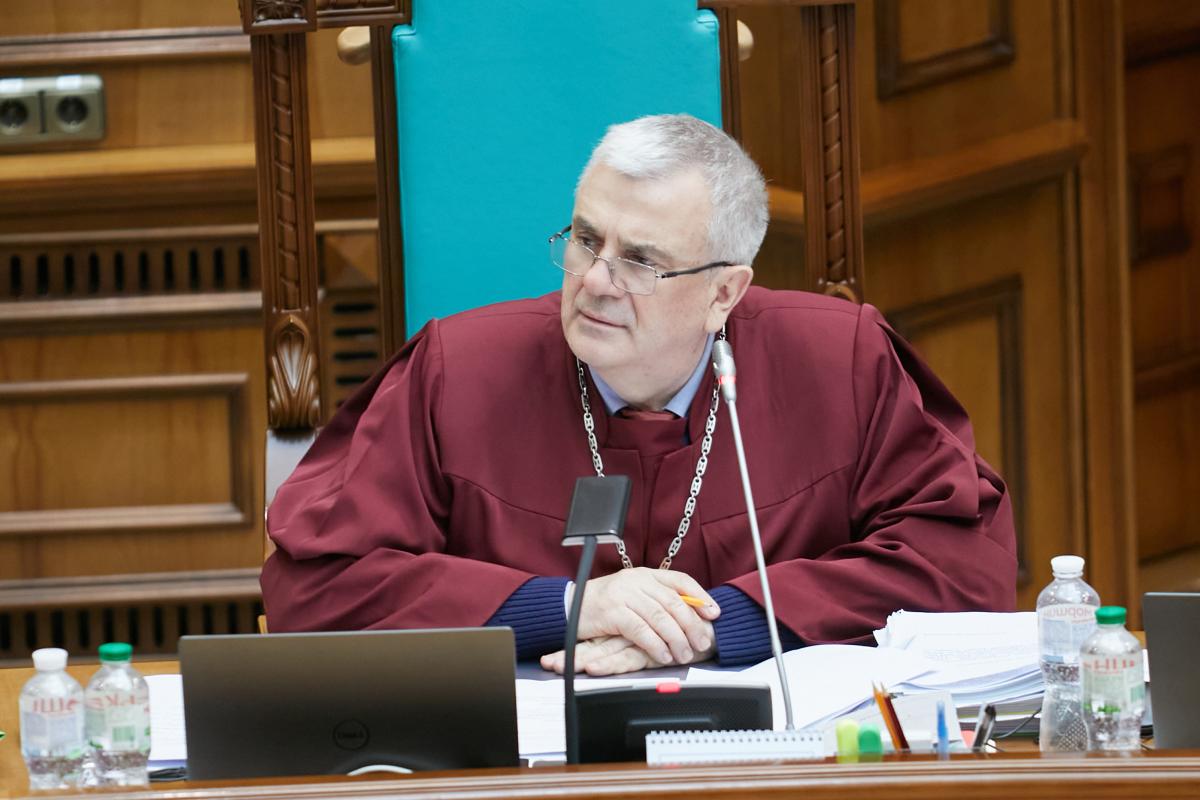
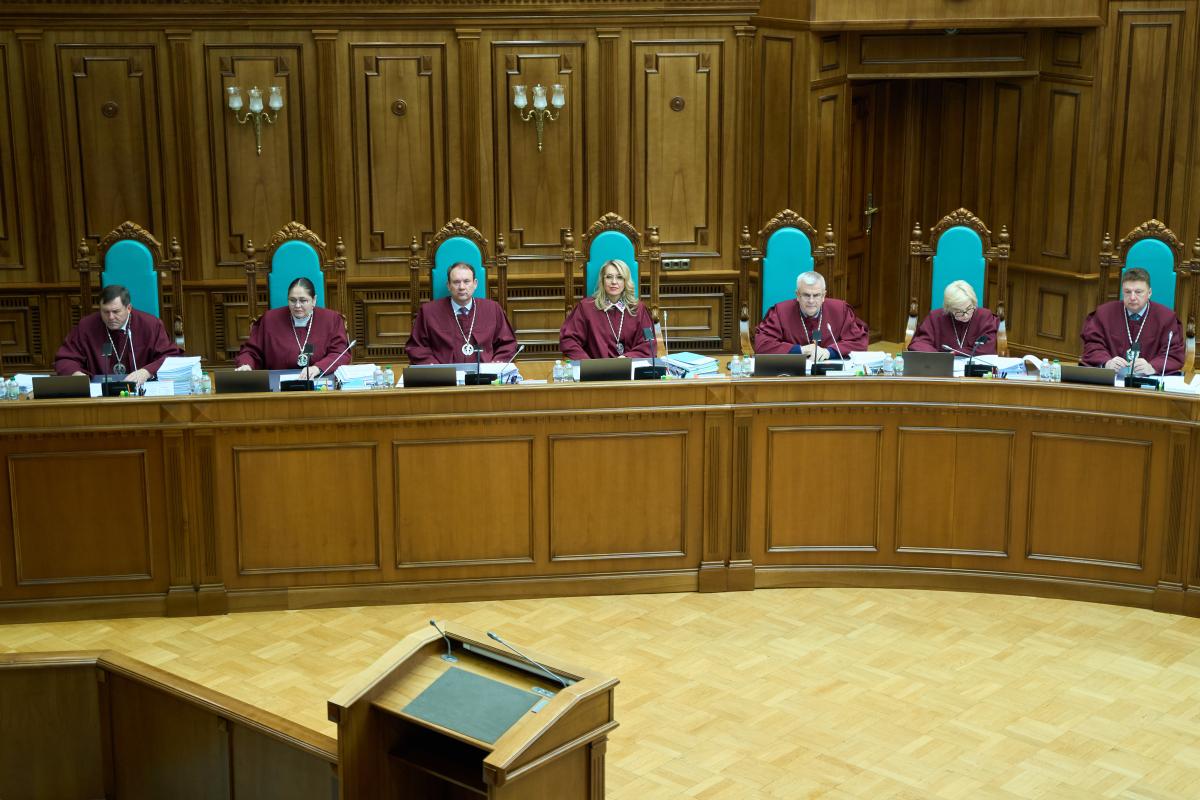
On 5 November 2026, the Grand Chamber of the Constitutional Court of Ukraine, during the public part of its plenary session held in the form of written proceedings, examined the case upon the constitutional petition of the Supreme Court.
During the plenary session, Oleksandr Petryshyn, the Judge-Rapporteur in the case, informed the Court that the Supreme Court appealed to the Constitutional Court of Ukraine to examine the conformity of paragraph 7 of the “Final Provisions” Section of the Law of Ukraine “On the State Budget of Ukraine for 2025” No. 4059–IX dated 19 November 2024 (hereinafter, “Law No. 4059”) and paragraph 6 of the “Final Provisions” Section of the Law of Ukraine “On the State Budget of Ukraine for 2026” No. 4695–IX dated 3 December 2025 (hereinafter, “Law No. 4695”) with the Constitution of Ukraine, insofar as they concern the provision of benefits envisaged by Article 6.1.6 of the Law of Ukraine “On the Status of Veterans of Military Service, Veterans of Internal Affairs Bodies, Veterans of the National Police and Certain Other Persons and Their Social Protection” No. 203/98–VR dated 24 March 1998, as amended (hereinafter, “Law No. 203”).
According to the contested provisions of paragraph 7 of the “Final Provisions” Section of Law No. 4059 and paragraph 6 of the “Final Provisions” Section of Law No. 4695, in 2025 (Law No. 4059) and 2026 (Law No. 4695), respectively, provided that the average monthly aggregate family income per person for the preceding six months does not exceed the income threshold entitling a person to a tax social benefit, the benefits envisaged by Article 6.1.6 of Law No. 203 shall be granted in accordance with the procedure determined by the Cabinet of Ministers of Ukraine.
Pursuant to Article 6.1.6 of Law No. 203, veterans of military service, internal affairs bodies, the National Police of Ukraine, the tax police, the Bureau of Economic Security of Ukraine, the State Emergency Service of Ukraine, the State Criminal and Executive Service of Ukraine, the civil protection service, and the State Service for Special Communications and Information Protection of Ukraine are entitled to benefits, including “a 50 per cent reduction in charges for the use of housing (rent) and utility services (water supply, gas, electricity, thermal energy and other services), as well as for the use of a residential telephone, for veterans of military service, veterans of internal affairs bodies, veterans of the National Police, veterans of the tax police, veterans of the State Emergency Service of Ukraine, veterans of the State Criminal and Executive Service of Ukraine, veterans of the civil protection service, veterans of the State Service for Special Communications and Information Protection of Ukraine and their family members residing with them in residential buildings of all forms of ownership, within the limits established by law, or a 50 per cent reduction in the cost of fuel, including liquid fuel, within the limits established for its sale to the population, for persons residing in houses without central heating”.
The Supreme Court maintains that changes to the legal regulation of relations in the field of social protection of persons falling, inter alia, within the scope of Law No. 203 may be introduced only by amending that same Law, while other regulatory legal acts may be applied only if adopted in accordance with those laws. It further argues that the application of restrictions on benefits for the category of persons discharged from military service, as well as certain other persons entitled to benefits under Law No. 203, results in a restriction of the constitutional right of that category of persons to adequate social protection.
The Judge-Rapporteur informed the Court that, in order to ensure a comprehensive and objective examination of the case, he had sent requests for information to state authorities and research institutions. The judges would be informed of the positions expressed in response during the in-camera part of the plenary session.
Having examined the case materials, the Court proceeded to the in-camera part of the plenary session.
The plenary session was attended by the representatives of the subject of the right to constitutional petition, namely Rasim Babanly, Head of the Secretariat of the Supreme Court, and Serhii Dembovskyi, Representative of the President of Ukraine in the Constitutional Court of Ukraine.
The video recording of the plenary session is available on the Court’s official website under “Video Broadcasts of the CCU’s Sessions” – “Archive of Video Broadcasts of Sessions”.