Constitutional Limits on the Retroactive Effect of Law in Time in the Context of the Constitutional Court of Ukraine’s Decision No. 5-r(II)/2026 dated 24 June 2026: Thematic Online Lecture
08.10.2026
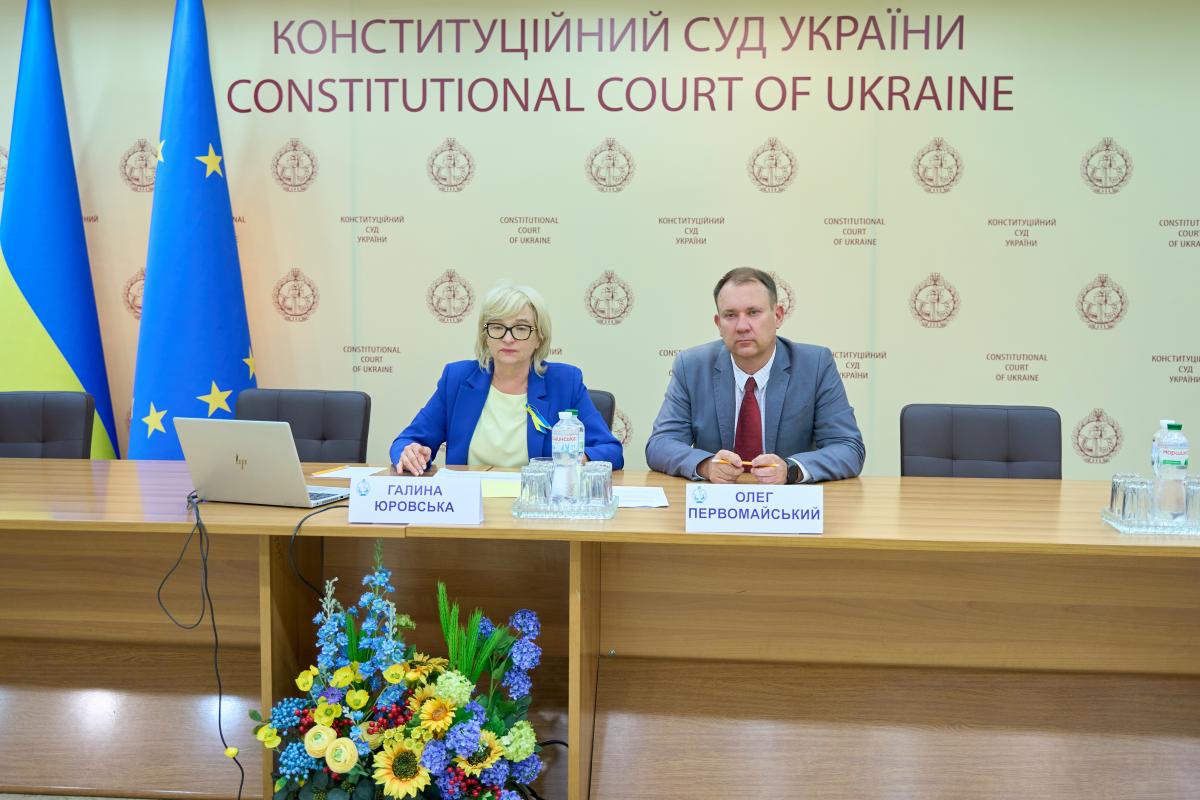
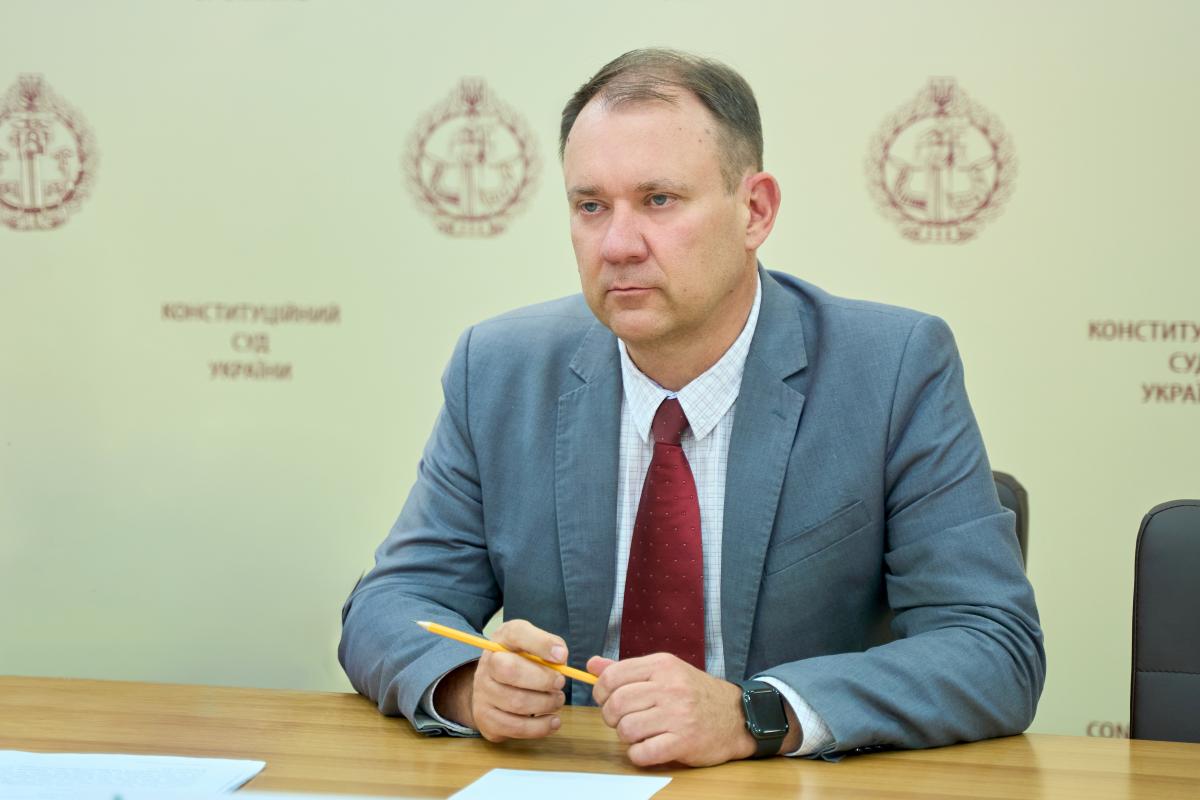
This topic was addressed in presentations by Judges of the Constitutional Court of Ukraine Galyna Yurovska and Oleh Pervomaiskyi (Judge-Rapporteur in this case).
The event brought together a wide audience, including representatives of the National School of Judges of Ukraine, legal practitioners, lawyers, prosecutors, judges of the judicial system, scientists, lecturers, postgraduate students, students of higher education institutions and participants of the Junior Academy of Sciences.
The focus of the event was Decision No. 5-r(II)/2026 of the Constitutional Court of Ukraine, delivered in the case upon the constitutional complaint of Viktor Prykhodko concerning the constitutionality of paragraph 131.1 of Section XV “Final Provisions” of the Law of Ukraine “On Mandatory State Pension Insurance” No. 1058-IV dated 9 July 2003, as amended by the Law of Ukraine “On Amendments to Certain Legislative Acts of Ukraine Concerning the Increase of Pensions” No. 2148-VIII dated 3 October 2017.
Following consideration of the case, the Constitutional Court of Ukraine declared the contested provision unconstitutional, as a result of which it ceased to have effect.
The subject of constitutional review in this case was the issue of the applicant’s pension provision and the application to him of legislative amendments adopted on 3 October 2017, the effect of which had been extended to legal relations arising from 1 October 2017.
Outlining the circumstances of the case, Judge of the Constitutional Court of Ukraine Galyna Yurovska emphasised that the effect of the relevant provision had been extended to legal relations that had arisen before the law itself was adopted. According to the case materials, in December 2017, a court ordered the recalculation of the applicant’s pension at 90 per cent of his monthly salary without limitation of its maximum amount; however, from 1 July 2018, on the basis of the new legislative regulation, the amount of the pension payment was substantially reduced.
Subsequently, the applicant brought proceedings before the court, insisting that the previous legislative regulation should be applied to him. After the administrative courts dismissed his claims, V. Prykhodko exercised his right to a constitutional complaint and raised before the Constitutional Court of Ukraine the issue of the compliance of the provisions of the Law dated 3 October 2017, insofar as they extended their effect from 1 October 2017 with the Constitution of Ukraine. In the view of the subject of the right to a constitutional complaint, such legislative regulation was incompatible with the Constitution of Ukraine.
Galyna Yurovska informed the participants about the legal positions expressed in the constitutional proceedings by the President of Ukraine and the Chairman of the Verkhovna Rada of Ukraine, and noted that, in considering the case, the Constitutional Court of Ukraine had also taken into account the provisions of the European Social Charter, the approaches of the European Commission For Democracy through Law (Venice Commission), and the case-law of the European Committee of Social Rights and the European Court of Human Rights.
Judge-Rapporteur in the case, Judge of the Constitutional Court of Ukraine Oleh Pervomaiskyi, drew attention to the importance of the case-law of the European Committee of Social Rights for understanding and applying the provisions of the European Social Charter, noting that the relevant body of work is increasingly being taken into account by the Constitutional Court of Ukraine when considering cases in the social sphere.
Oleh Pervomaiskyi emphasised that the legislature has broad discretion in determining and changing mechanisms of social and pension provision. At the same time, such discretion does not relieve Parliament of its duty to comply with the values, principles and provisions of the Constitution of Ukraine, including the requirements of predictability of legislative changes and the temporal effect of laws.
The Judge also addressed the need to establish an adequate transitional period where legislative regulation undergoes substantial change. “When a law is adopted that affects sensitive social relations, the legislature must give a person an opportunity to prepare for a change in the legislative regulation,” Oleh Pervomaiskyi noted. According to him, this applies not only to the social sphere, but also to tax, procedural and other social relations in which a change in legislative regulation may substantially affect a person’s position.
The Judge-Rapporteur noted that the retroactive effect of a law is not, in itself, constitutionally unacceptable in all cases. It may be permissible if the new regulation is aimed at affirming and ensuring human rights and improves a person’s legal position, or, in the sphere of legal liability, if the law mitigates or abolishes a person’s liability.
At the same time, according to the Judge-Rapporteur, extending new legislative regulation to legal relations that arose before the law was adopted, if this worsens a person’s position, should be assessed in the light of the requirements of Articles 57, 58 and 94 of the Constitution of Ukraine.
Outlining the constitutional and legal issues raised by the case, Oleh Pervomaiskyi emphasised that the key issue was not so much the length of the period for which the legislative regulation was given retroactive effect as compliance with the constitutional principle that, as a general rule, the legislature may not establish adverse legal consequences for a person with retroactive effect.
During the discussion, the participants also raised issues concerning the predictability of legislation in the areas of privatisation, leasing of state property and investment activity. In response to these questions, the Judges emphasised that the Constitutional Court of Ukraine does not formulate state policy in these areas and does not determine which particular model of legal regulation the legislature should choose. At the same time, any model chosen by Parliament must comply with the Constitution of Ukraine.
A dissenting opinion by Judge of the Constitutional Court of Ukraine Oleksandr Vodiannikov is attached to the Decision. It sets out his views and conclusions on its main aspects.
For more details, see the video: https://youtu.be/CbSTkgcAhUE.