The Red Lines of Democracy: The Experience of Susanne Baer, Former Judge of the German Federal Constitutional Court
18 March 2026
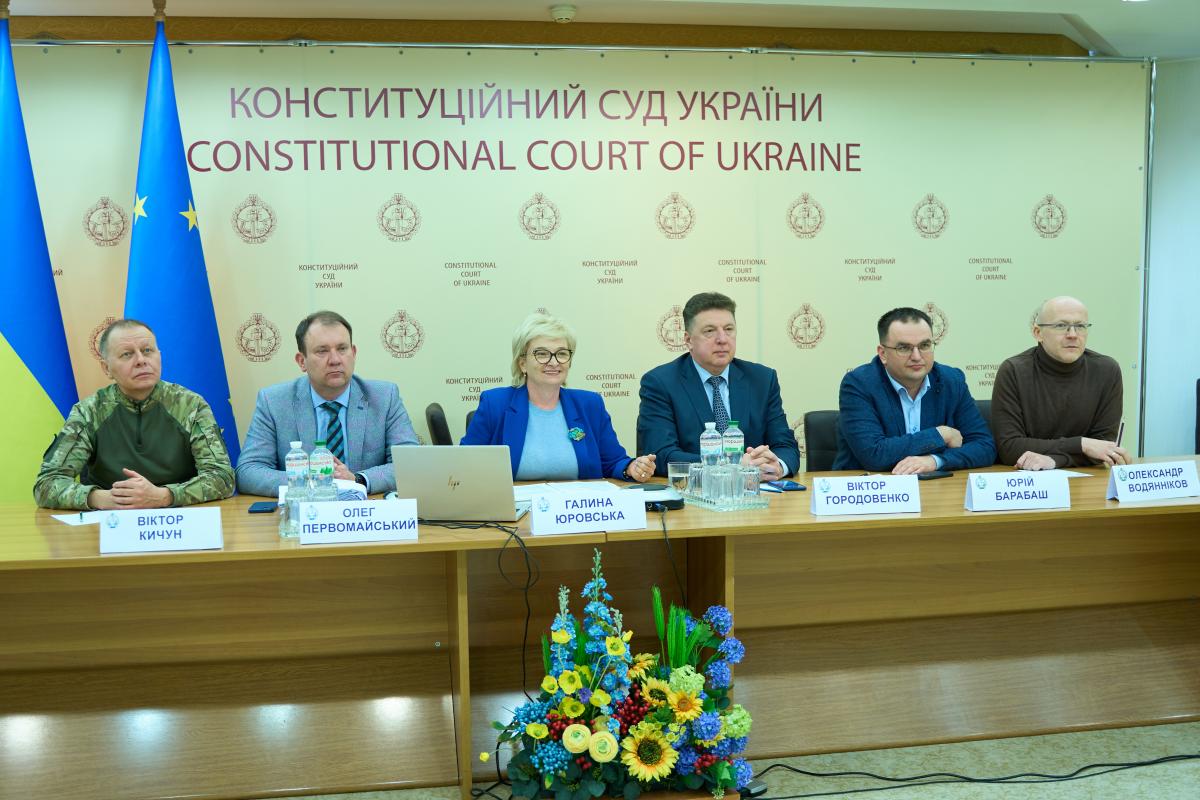
On 12 March 2026, an event was held at the Constitutional Court of Ukraine dedicated to the specific features of the work of Germany’s Constitutional Court. The lecture was entitled “How to Protect Democracy: The Practice of the German Federal Constitutional Court in Building Consensus – From Climate Change to Freedom of Speech”.
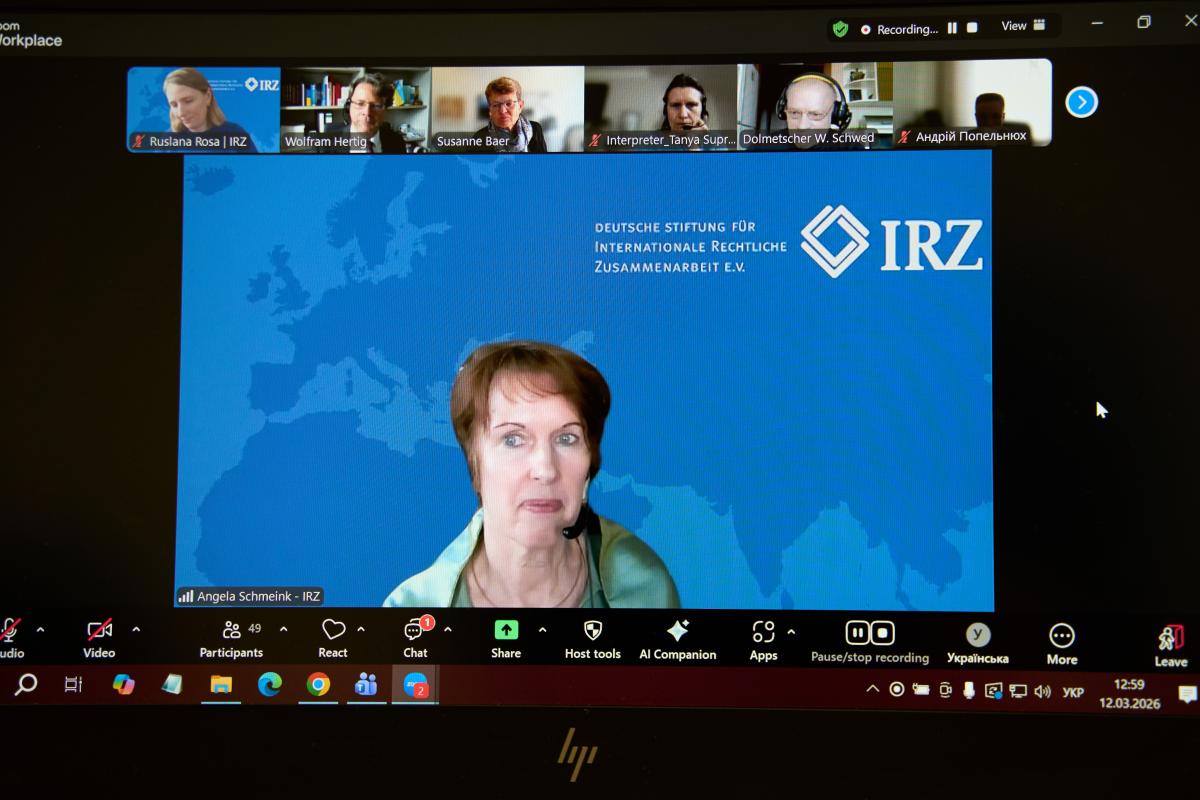
The event was supported by the German Foundation for International Legal Cooperation and attracted a wide legal audience: lawyers, prosecutors, judges from the judicial system, representatives of the National School of Judges of Ukraine, academics, lecturers, postgraduate students, undergraduates from higher education institutions, and the youngest researchers from the Junior Academy of Sciences.
The online lecture was attended by judges of the Constitutional Court of Ukraine Yuriy Barabash, Oleksandr Vodiannikov, Viktor Gorodovenko, Viktor Kychun, Oleg Pervomayskyi, Galyna Yurovska, Angela Schmeink, project manager in Ukraine and Vietnam at the German Foundation for International Legal Cooperation (IRZ), Wolfram Gertig, senior project manager at IRZ, and Gennadiy Ryzhkov, legal advisor at IRZ.
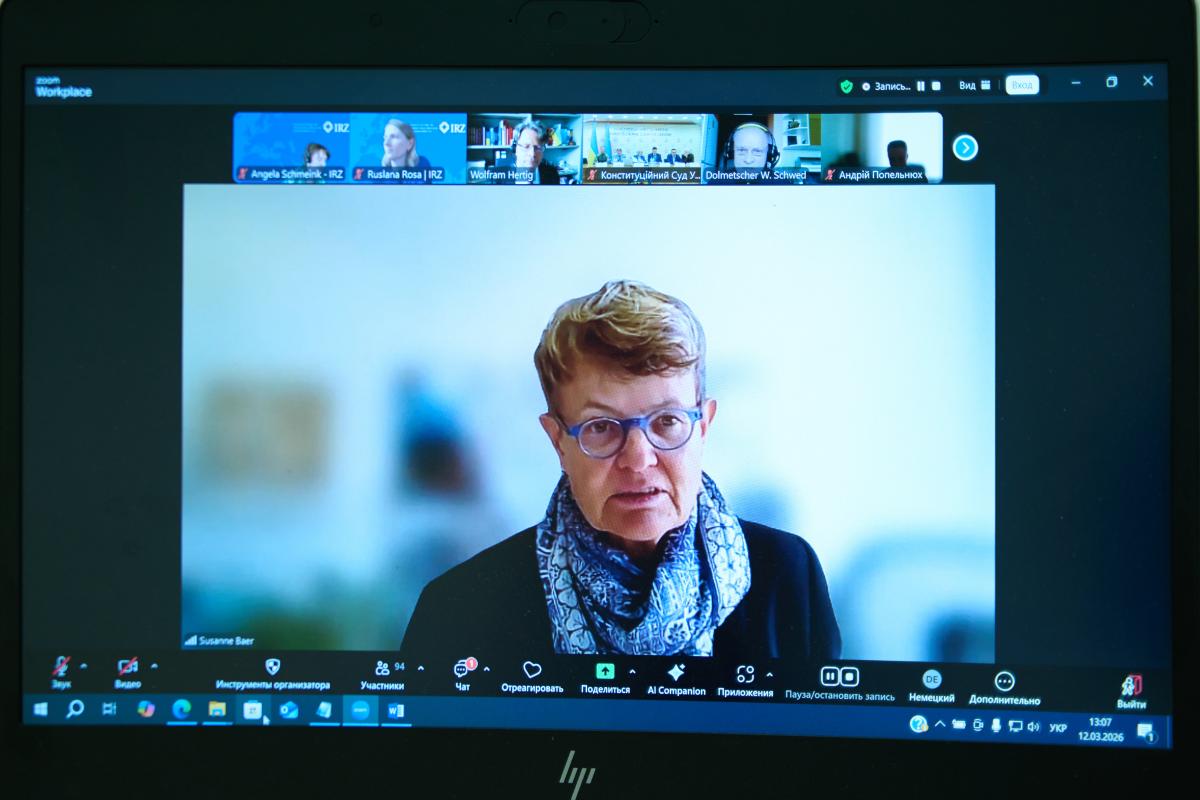
The keynote speaker was Susanne Baer – a judge at the Federal Constitutional Court (BVerfG) of Germany from 2011 to 2023, and a professor of public law and gender studies at Humboldt University in Berlin. The scholar is the author of the bestseller Rote Linien (“Red Lines”), published in 2025, which sheds light on the institutional life and inner workings of one of Europe’s most authoritative constitutional courts. During the lecture, the professor also shared her exclusive insights into the workings of the German BVerfG from the inside.
Susanne Baer emphasised the constitutional court’s contribution to strengthening democracy. Germany’s Basic Law stipulates that all power belongs to the people and is always linked to democratic procedures and fundamental human rights, the speaker noted. In this context, she drew an apt analogy with football: democracy requires effort, and politicians, like players, must abide by fair rules. The Constitutional Court acts as the referee in this process. Its task is to stand guard over justice and ‘red lines’, whilst not interfering in politics as such.
The speaker familiarised the audience with the structure of the Constitutional Court, emphasising the importance of gender parity and the diversity of the judges’ professional experience – ranging from academic circles to practical judicial practice. She spoke in detail about the complex professional discussions that precede the formation of the court’s legal positions. “Lawyers fight over every word and comma, because the position must be clearly formulated,” noted the speaker, emphasising the importance of discussions until a formulation is found that satisfies everyone.
She emphasised that it is common practice for the Federal Constitutional Court to involve experts – academics, members of the public, and specialists in the field – in expressing their views as early as the discussion stage. The public is familiar with this practice, which is a strength of the German court.
Susanne Baer cited key examples from the Federal Constitutional Court’s case law that illustrate the resilience of democracy in difficult times. In particular, the Court has handed down progressive rulings on tackling the climate crisis, the use of surveillance measures, and the protection of refugees’ rights. The Court has repeatedly demonstrated the courage to act contrary to political trends, firmly emphasising the primacy of the Constitution and the inalienability of human rights, which form the basis of the German legal system.
In conclusion, the speaker noted that the German Federal Constitutional Court is held in high esteem, and this respect is rooted in a “constitutional culture” that is an integral part of public consciousness. She also answered questions from the judges.
The judges thanked Susanne Baer for her informative lecture and the opportunity to learn more about the working principles of one of Europe’s most authoritative judicial institutions.
For more details, watch the video at the link: https://youtu.be/IFlLpYssaMM