Cancellation of a Preventive Measure for Military Service: The Court Deliberates the Case upon the Constitutional Complaint of Yevhen Heniievskyi
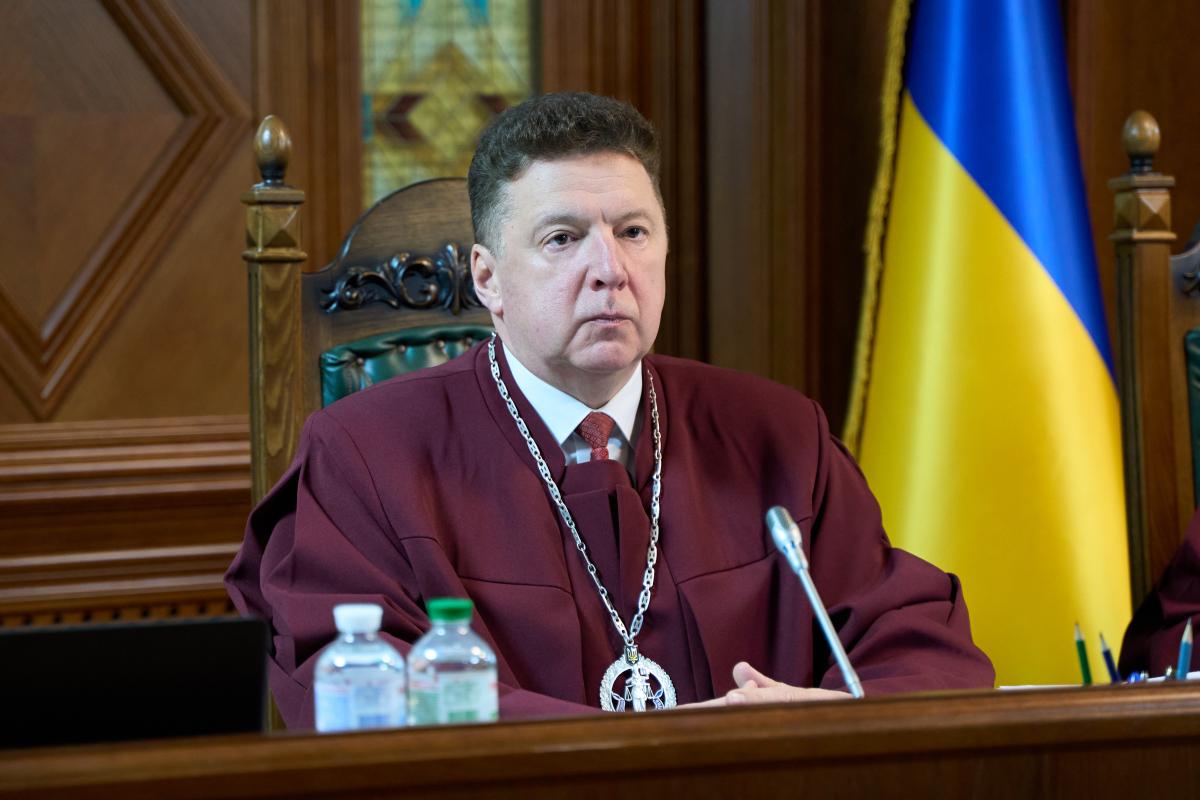
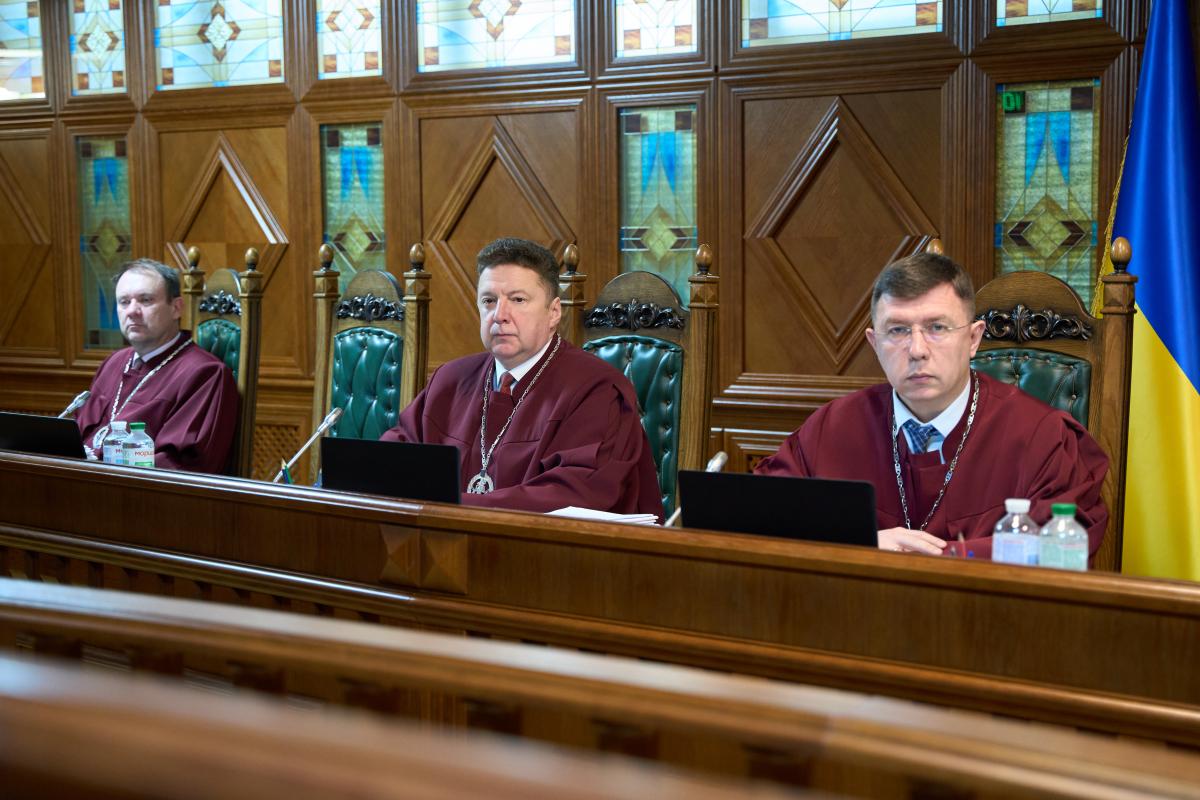
On 26 November 2025, the Second Senate, at the open part of its plenary session held in the form of written proceedings, deliberated the case upon the constitutional complaint submitted by Yevhen Heniievskyi.
During the plenary session, the Judge-Rapporteur in the case, Viktor Gorodovenko, presented the substance of the constitutional complaint and the applicant’s arguments. The Judge reported that Heniievskyi applied to the Constitutional Court of Ukraine requesting to review of the constitutionality of Article 616.1.2 of the Criminal Procedure Code of Ukraine (hereinafter, the “Code”).
The Article 616.1.1 of the Code stipulates that in the case of the introduction of martial law, the implementation of measures to ensure national security and defence, repel and deter the armed aggression of the Russian Federation and/or other states against Ukraine, a suspect or accused person who is held in custody during pre-trial investigation or trial, except in the cases specified in that paragraph, has the right to apply to the prosecutor with a motion to initiate before an investigating judge or a court the issue of cancelling this preventive measure for the continuation and/or performance of military service by conscription during mobilisation, in the special period, and/or military service under contract for privates, sergeants, petty officers, and officers.
According to Article 616.1.2 of the Code, “based on the results of considering the petition provided for in the first paragraph of this Article, the prosecutor may apply to the investigating judge or the court examining the criminal proceedings with a petition to cancel the preventive measure in the form of custody for the continuation and/or performance of military service by conscription during mobilisation, in the special period, and/or military service under contract for privates, sergeants, petty officers, and officers.”
The applicant argues that Article 616.1.2 of the Code violates the constitutional rights of the accused to apply to a court, to appeal actions/omissions of officials of the prosecution bodies in court, as well as the fundamental principles of justice, including the equality of all participants in the judicial process and the adversarial nature of the parties.
In his opinion, the assertions of a prosecutor from the Kherson Specialised Defence Prosecutor’s Office of the Southern Region regarding the existence of risks defined in Article 177.1 of the Code violate Article 62 of the Constitution of Ukraine, which states that an accusation cannot be based on assumptions, and a “risk” constitutes the probability of an event occurring, which is also an assumption, as the event has not actually occurred. Moreover, refusal to support the accused’s petition in court violates the citizen’s duty (Article 65 of the Constitution of Ukraine) and right to defend the Motherland against hostile aggression, as well as Article 22 of the Constitution of Ukraine, which states that constitutional rights and freedoms are guaranteed and cannot be abolished.
The applicant maintains that “the refusal to cancel detention for the continuation of military service on the grounds of the accused performing their constitutional duty <…> contradicts the provisions of both mobilisation and criminal procedural legislation and the state policy under martial law.”
The Judge-Rapporteur also informed about the course of consideration of the relevant case in the courts of the judicial system.
The Judge-Rapporteur stated that in accordance with the requirements of the Law on the Constitutional Court of Ukraine, requests have been sent to state authorities to clarify their positions in this case, as well as requests to academic institutions to obtain their expert opinions on the matters raised in the constitutional complaint. The judges will be informed on the content of the answers during the in-camera part of the plenary session.
After examining the case materials, the Court proceeded to the in-camera part of the plenary session.
The public part of the plenary session is available on the Court's official website in the Section “Archive of video broadcasts of sessions”.