29 April 2026
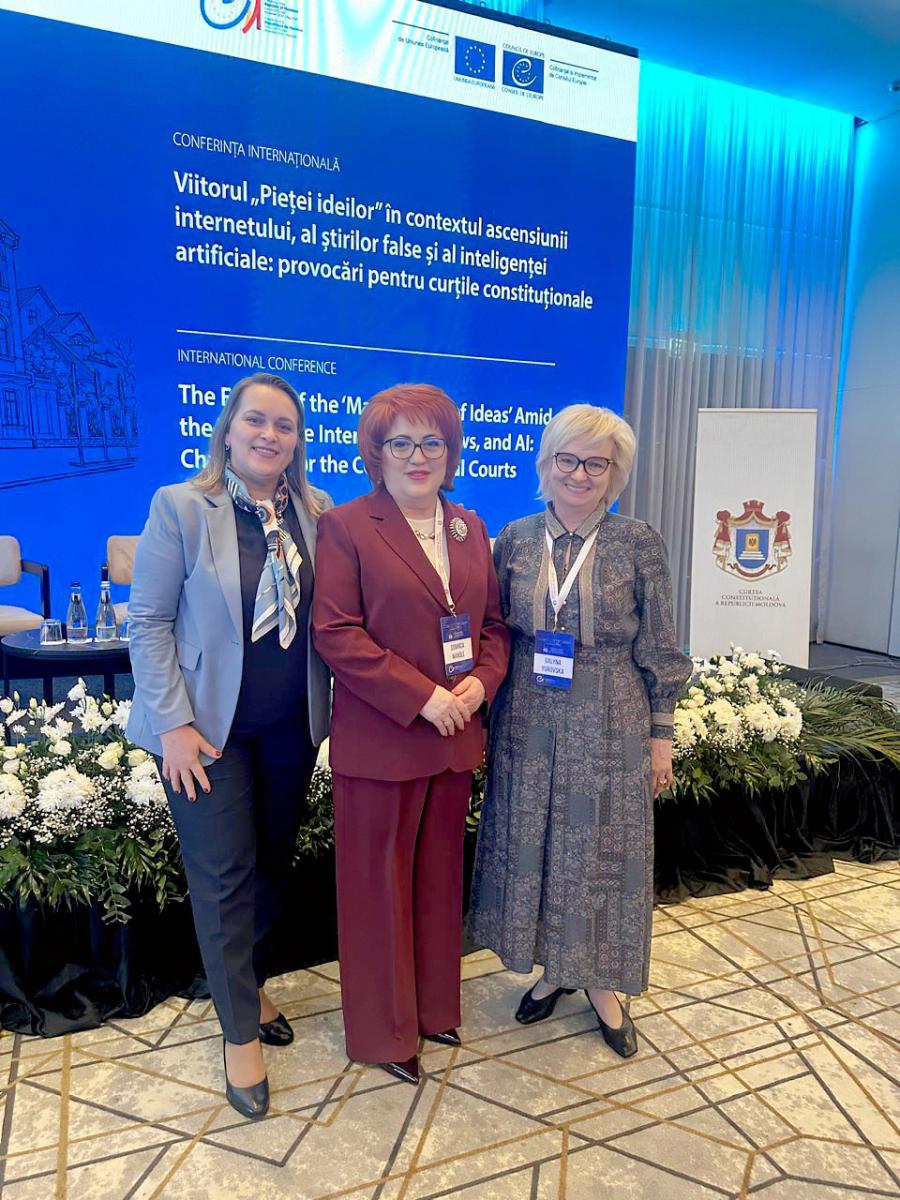
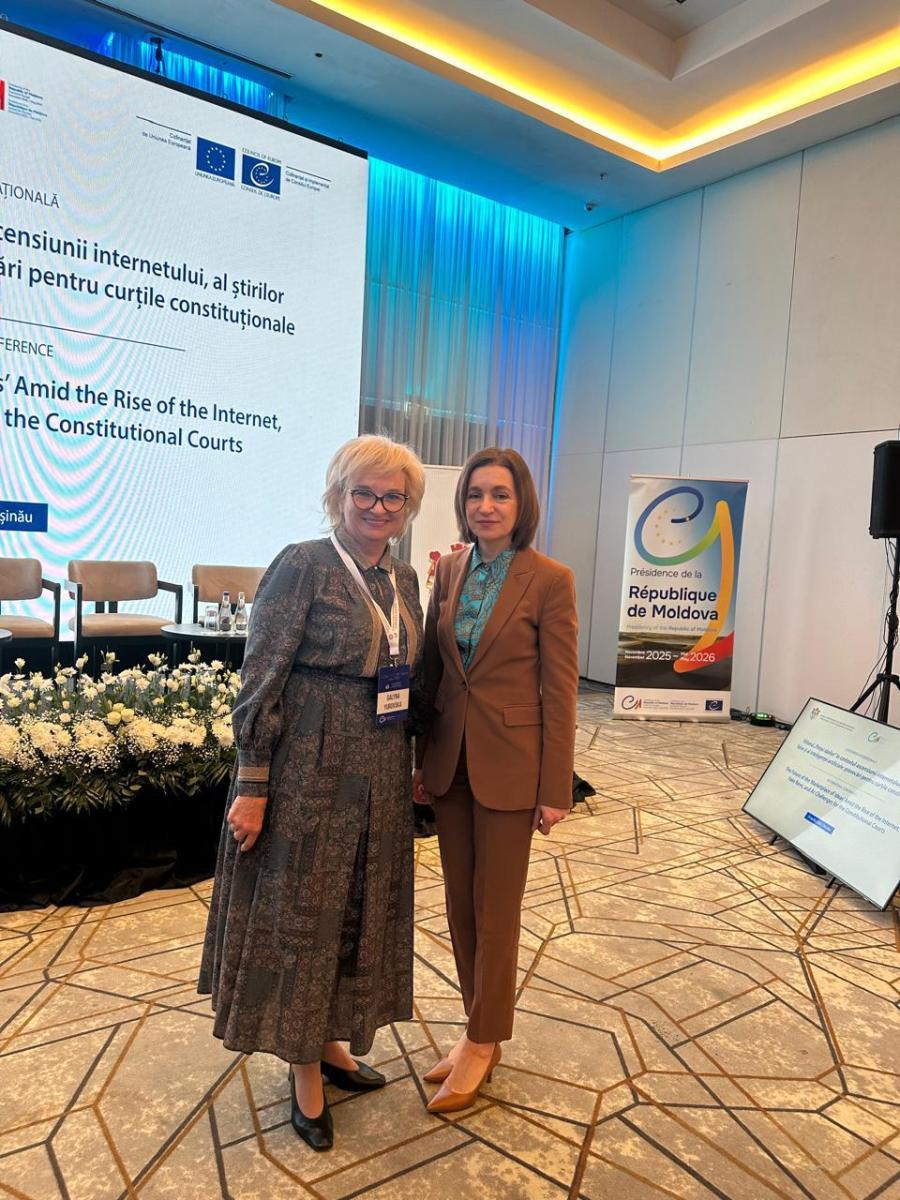
On 24 April 2026, a judge of the Constitutional Court of Ukraine Galyna Yurovska, took part in the international conference “The Future of the ‘Marketplace of Ideas’ Amid the Rise of the Internet, Fake News, and AI: Challenges for the Constitutional Courts”.
This event, organised as part of the Republic of Moldova’s chairmanship of the Committee of Ministers of the Council of Europe, served as a platform for exchanging views on the challenges posed to public discourse by digitalisation, fake news and artificial intelligence, as well as on the role of constitutional courts in addressing these issues.
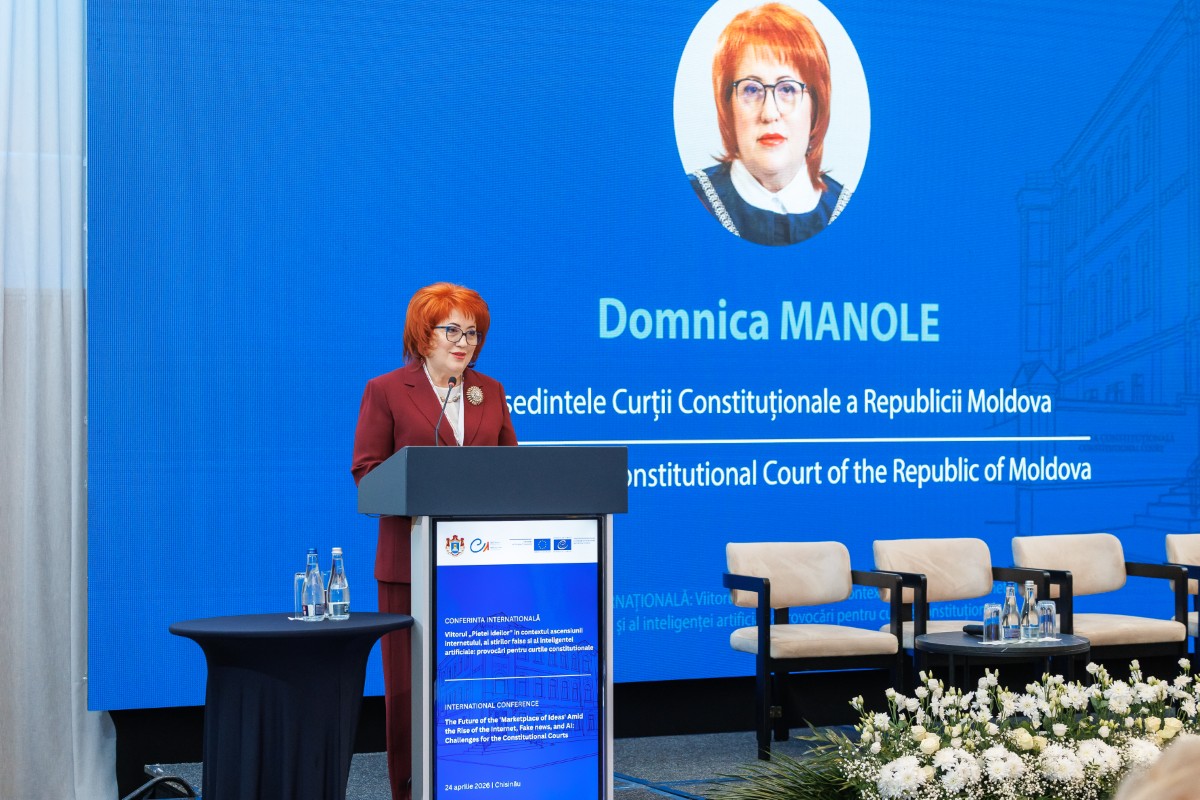
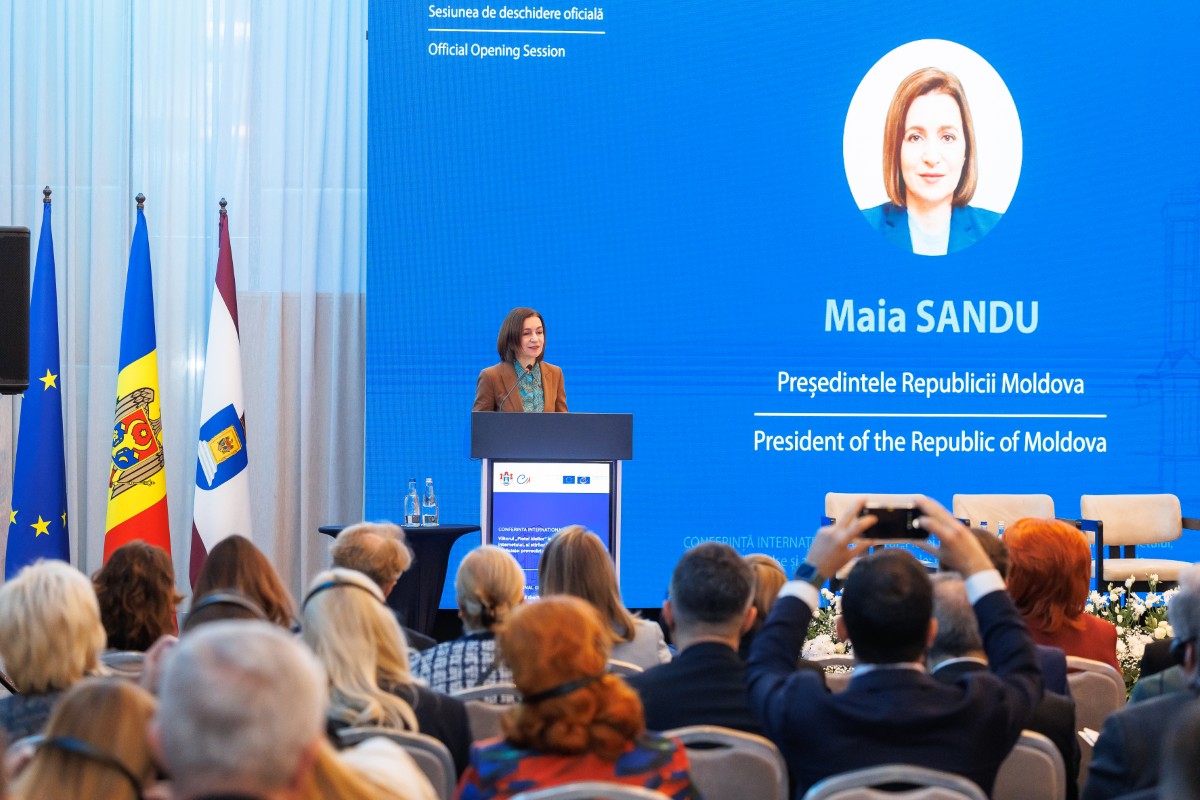
The conference was opened by President of the Constitutional Court of the Republic of Moldova, Domnica Manole. Welcoming speeches were delivered to the participants by President of the Republic of Moldova Maia Sandu, Director of Programme Coordination, Council of Europe Claus Neukirch, and Vice-President of the Venice Commission Timothy Otty.
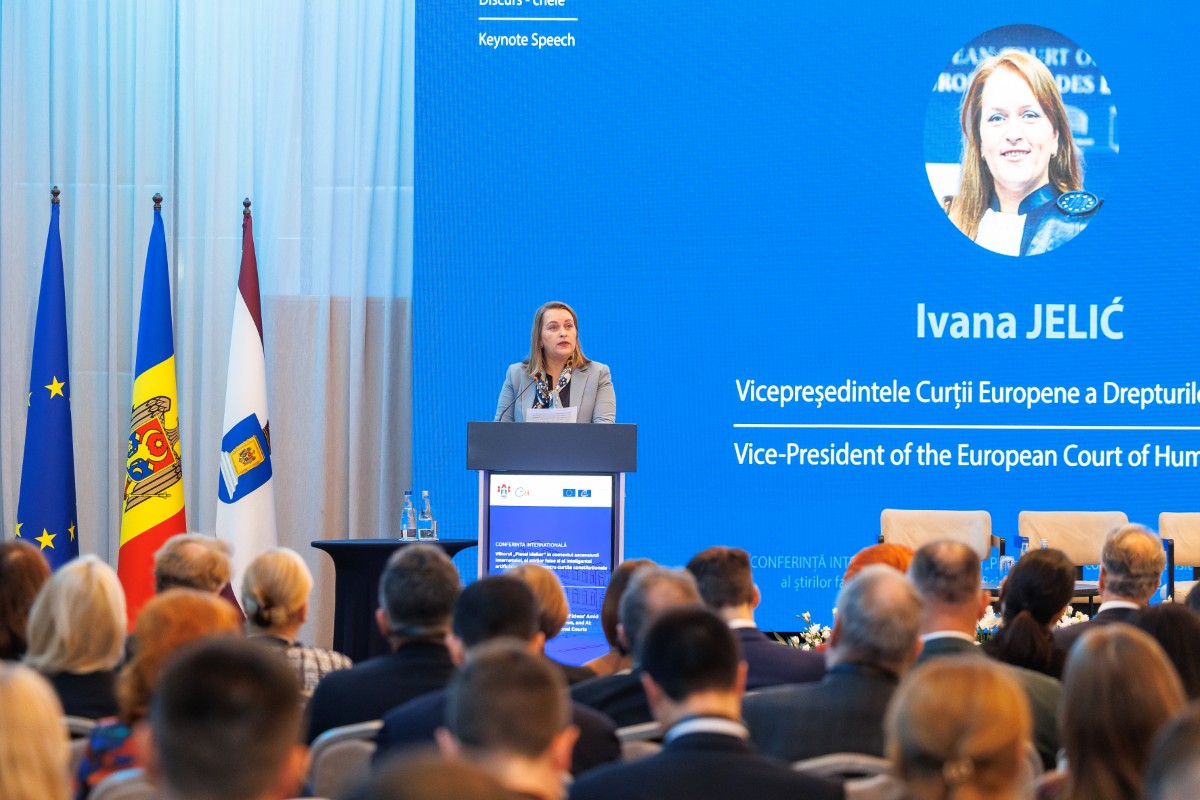
The event, which took the form of three panel discussions, began with a keynote speech by Ivana Jelić, Vice-President of the European Court of Human Rights. The speaker focused on the legal challenges in the application of artificial intelligence through the lens of the European Court of Human Rights case law, presenting relevant expert opinions and an analysis of judicial precedents.
During the subsequent discussion of current legal issues, conference participants focused on rethinking the concept of the “marketplace of ideas” in the digital age. In particular, discussions centred on questions regarding the definition of the limits of regulation of digital platforms and maintaining a balance between freedom of expression and the fight against disinformation. Particular attention was paid to the challenges facing constitutional jurisdiction in connection with the spread of fake news and the rapid development of artificial intelligence technologies.
In her speech, a judge of the Constitutional Court of Ukraine Galyna Yurovska, emphasised that for Ukraine, the risks posed by fake news are not abstract – they are systemic and immediate in the context of full-scale aggression and martial law. In these circumstances, disinformation functions as a tool of hybrid warfare, aimed at undermining trust, destabilising institutions and weakening the resilience of society. This places a heightened responsibility on the state and the courts.
Galyna Yurovska noted that platform algorithms and artificial intelligence significantly amplify the speed and scale of disinformation, requiring courts to adopt new approaches to assessing harm and determining liability. Ukraine’s experience highlights the need to develop effective legal remedies against harmful disinformation in times of war, drawing more heavily on European human rights standards and practical tools for adjudicating cases involving digital speech.
In conclusion, the judge emphasised that the priority in times of crisis is not only to protect freedom of speech but also to preserve its integrity from manipulation. At the same time, she stressed the need to ensure that all restrictions imposed remain firmly grounded in the rule of law as a fundamental principle of the constitutional state.
The event was attended by judges from the constitutional courts of European countries, representatives of the European Court of Human Rights, the Court of Justice of the European Union, international organisations and the academic community.