24 November 2025
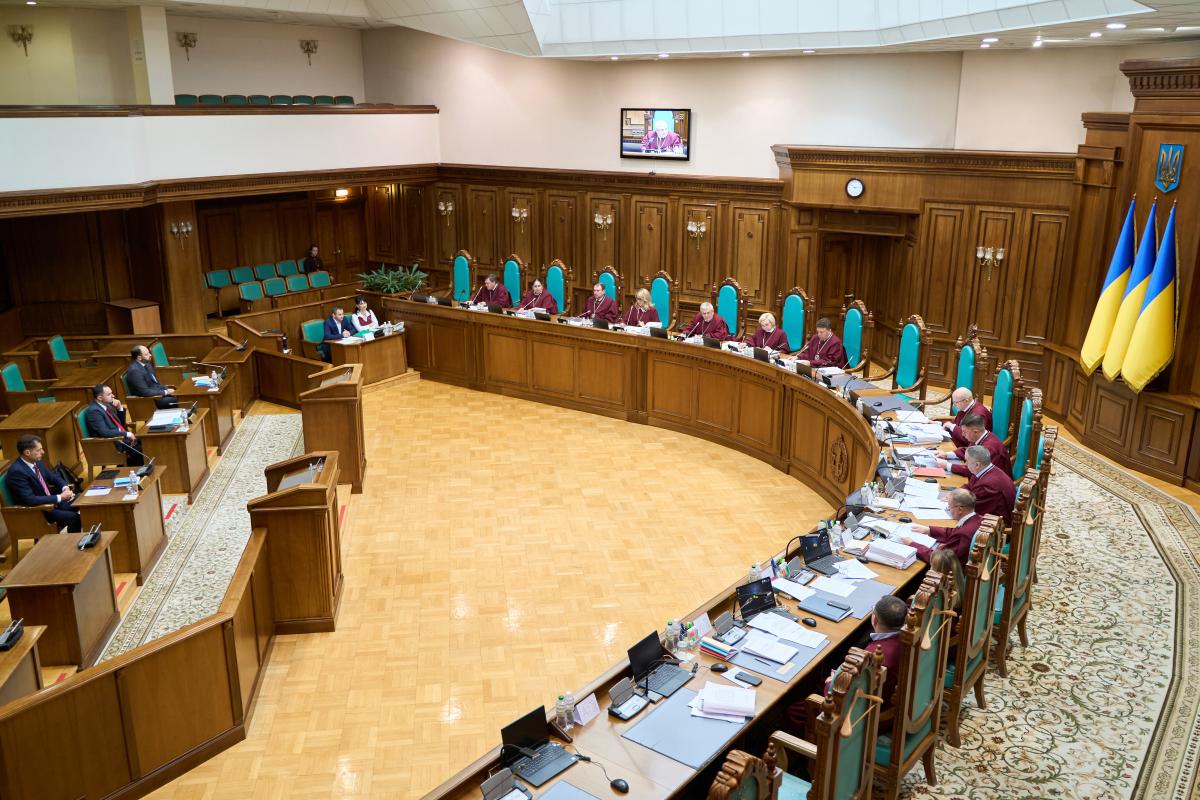
On 20 November 2025, during the public part of its plenary session, the Grand Chamber began deliberating, in written proceedings, a constitutional petition from the Supreme Court regarding the constitutionality of a specific provision of paragraph 10 of Article 212.1 of the Family Code of Ukraine (hereinafter, the “Code”).
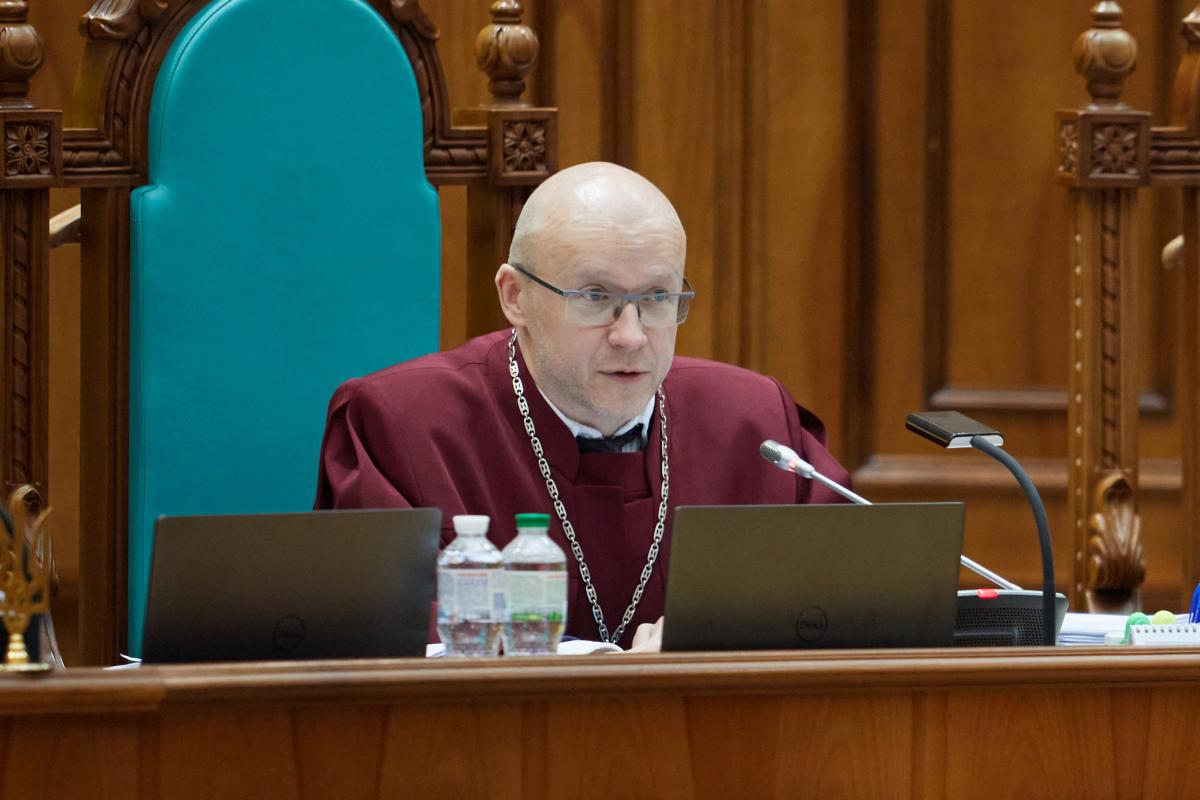
During the plenary session, the Judge-Rapporteur in the case, Oleksandr Vodiannikov, informed that the subject of the right to constitutional petition – the Supreme Court – had appealed to the Constitutional Court of Ukraine to verify the compliance of a separate provision of paragraph 10 of Article 212.1 of the Code “public order and morality”, according to which persons who “have been convicted of crimes against the foundations of national security of Ukraine, criminal offences against life and health, freedom, honour and dignity, sexual freedom and sexual integrity of a person, against public safety, public order and morality, in the sphere of trafficking in narcotic drugs, psychotropic substances, their analogues or precursors, peace, security of humanity and international legal order, as well as for crimes provided for in Articles 164, 166, 167, 169, 181, 187 of the Criminal Code of Ukraine, or have an unexpunged or unremoved conviction in accordance with the procedure established by law for committing other criminal offences” with Article 8.1, Article 21, Article 24.1, Article 51.3 of the Constitution of Ukraine.
In its constitutional submission, the Supreme Court asserts that the provision of paragraph 10 of part one of Article 212 of the Code, which “prohibits persons convicted of criminal offences against public order and morality from becoming adoptive parents, contradicts the principle of rehabilitation and creates “lifelong consequences” for the conviction of a person, as well as violates the principle of legal certainty. This is because a situation arises where a person's criminal record, which has been expunged in accordance with the rules of criminal law, is an obstacle to adoption under family law <...> the automatic prohibition on the adoption of a child by persons who have been convicted of criminal offences against public order and morality violates the fair balance that the state must ensure between the general interest and the interest of the individual”.
The subject of the right to constitutional petition emphasises that the contested legislative prohibition on adoption “is linked to the actual conviction for the relevant criminal offence, without taking into account the factor of the presence or absence of a criminal record for its commission, as well as without taking into account the factor of the specific offence that falls within this group of offences, and without assessing the personal characteristics of the potential adopter”. The presence of these factors, in the opinion of the Supreme Court, “may indicate that the relevant prohibition is excessive and, in turn, may lead to the best interests of the child not being taken into account, and therefore contradict the very essence of the institution of adoption”.
The Judge-Rapporteur informed that in order to ensure a full and objective deliberation of the case and the delivery of justified decision by the Court, he had sent requests to state authorities and scientific establishments in order to clarify scientific positions and scientific approaches to resolving the issues raised in the constitutional proceedings. The judges will be informed of the content of the positions expressed in the in-camera part of the plenary session.
After examining the case materials in the public part of the plenary session, the Court proceeded to the in-camera deliberations for a decision.
The plenary session of the Grand Chamber was attended by the representative of the subject entitled to file the constitutional petition, First Deputy Head of the Supreme Court Administration Rasim Babanly, Permanent Representative of the Verkhovna Rada of Ukraine to the Constitutional Court of Ukraine Maksym Dyrdin, and Representative of the President of Ukraine to the Constitutional Court of Ukraine Serhiy Dembovskyi.
The video recording of the plenary session is available on the Court’s official website in the Section “Archive of Video Broadcasts of Sessions”.